Why Connectivity Is Central to the DMIC Greater Noida Story
For an industrial corridor, connectivity is not simply about reducing travel time.
It determines how efficiently people, raw materials, finished products and services can move between different parts of an economic region.
This is particularly relevant to the DMIC Integrated Township Greater Noida, which is positioned alongside the Eastern Peripheral Expressway and the Delhi–Howrah railway line.
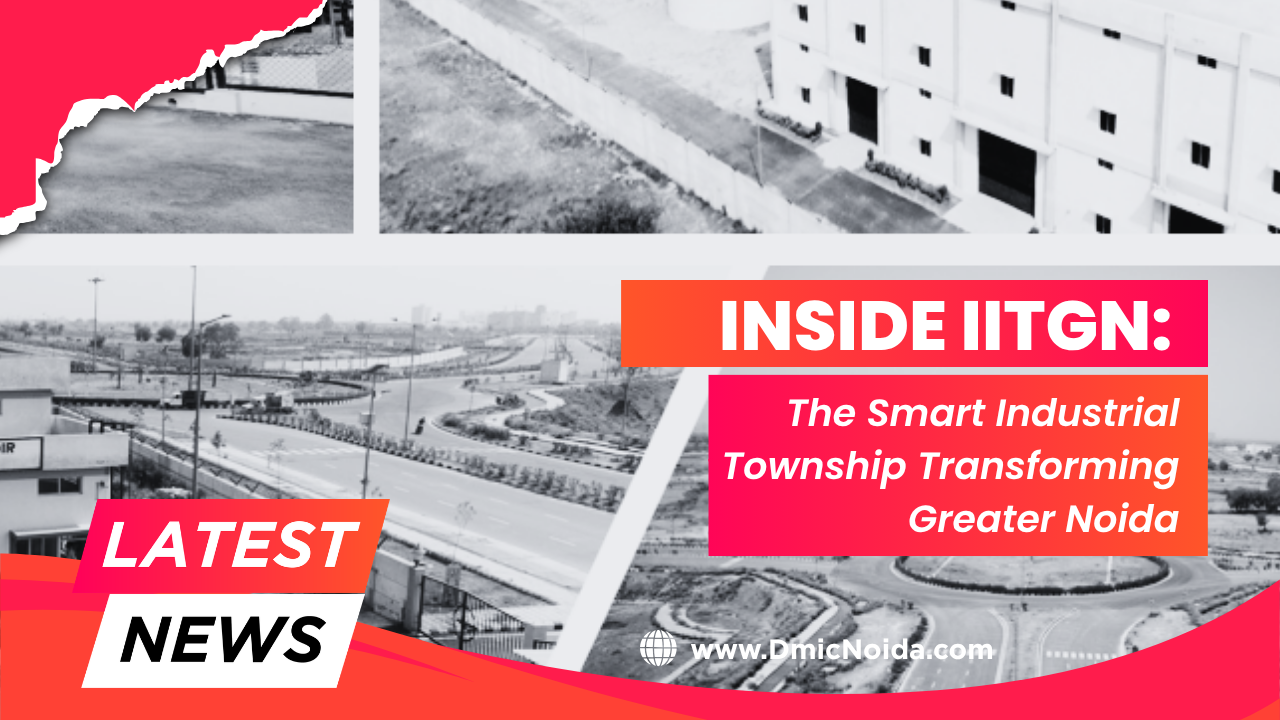
NICDC identifies the township as a 747-acre flagship DMIC project located southeast of Greater Noida, approximately 11 km from Pari Chowk.
Connectivity Snapshot
| Connectivity Element | Relevance to DMIC Greater Noida |
|---|---|
| Eastern Peripheral Expressway | Regional road connectivity |
| Delhi–Howrah Railway | Rail connectivity |
| Dadri | Logistics and freight ecosystem |
| Boraki | Planned transit/multimodal connectivity |
| Yamuna Expressway | Connection toward the Yamuna/airport region |
| Noida International Airport | Emerging passenger and cargo gateway |
| Dedicated Freight Corridors | Strategic freight movement |
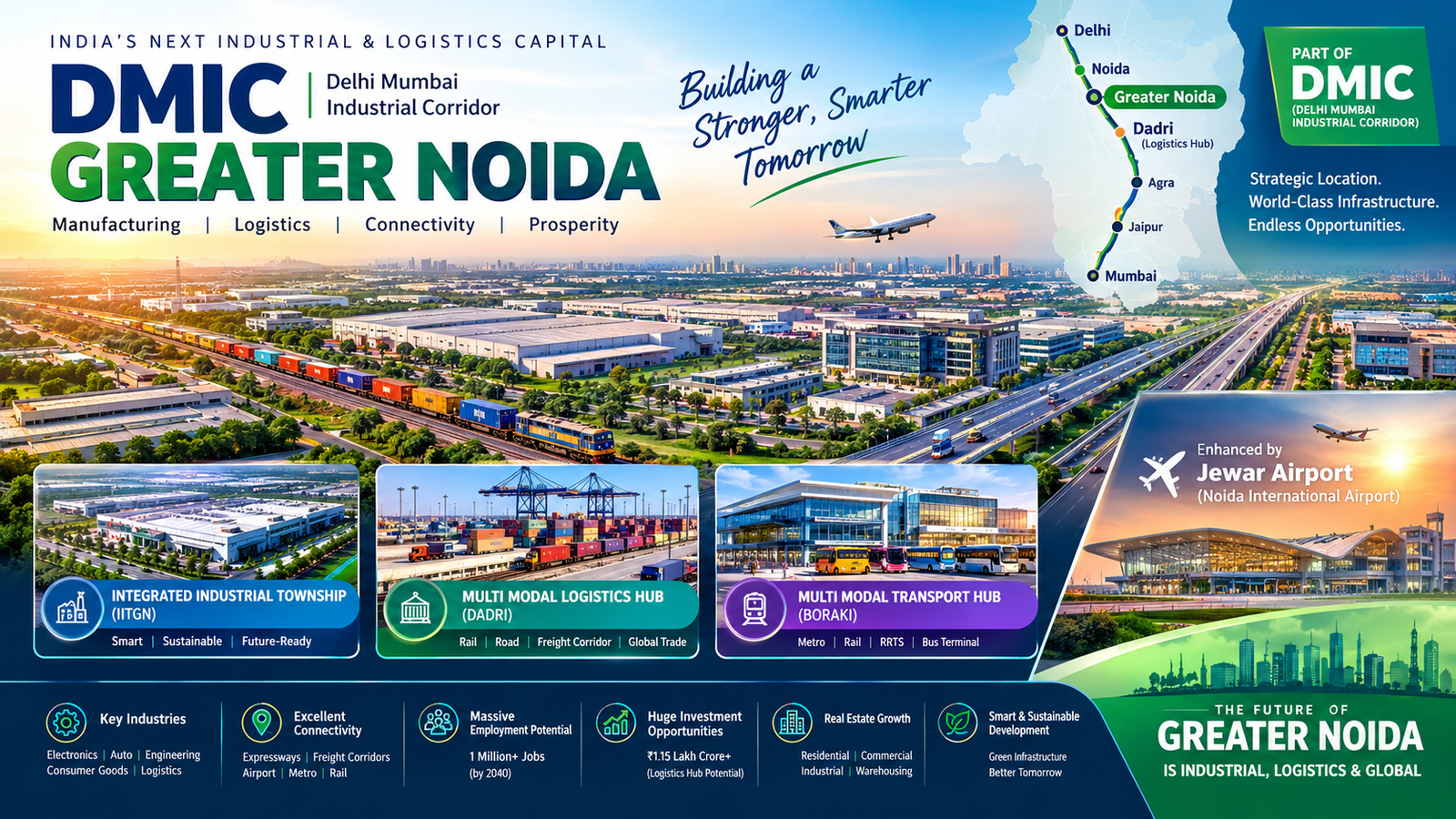
NICDC specifically identifies the Eastern Peripheral Expressway, Delhi–Howrah railway line, Boraki transit hub and Dadri logistics hub among the major connectivity features of the township.
What Is the Eastern Peripheral Expressway?
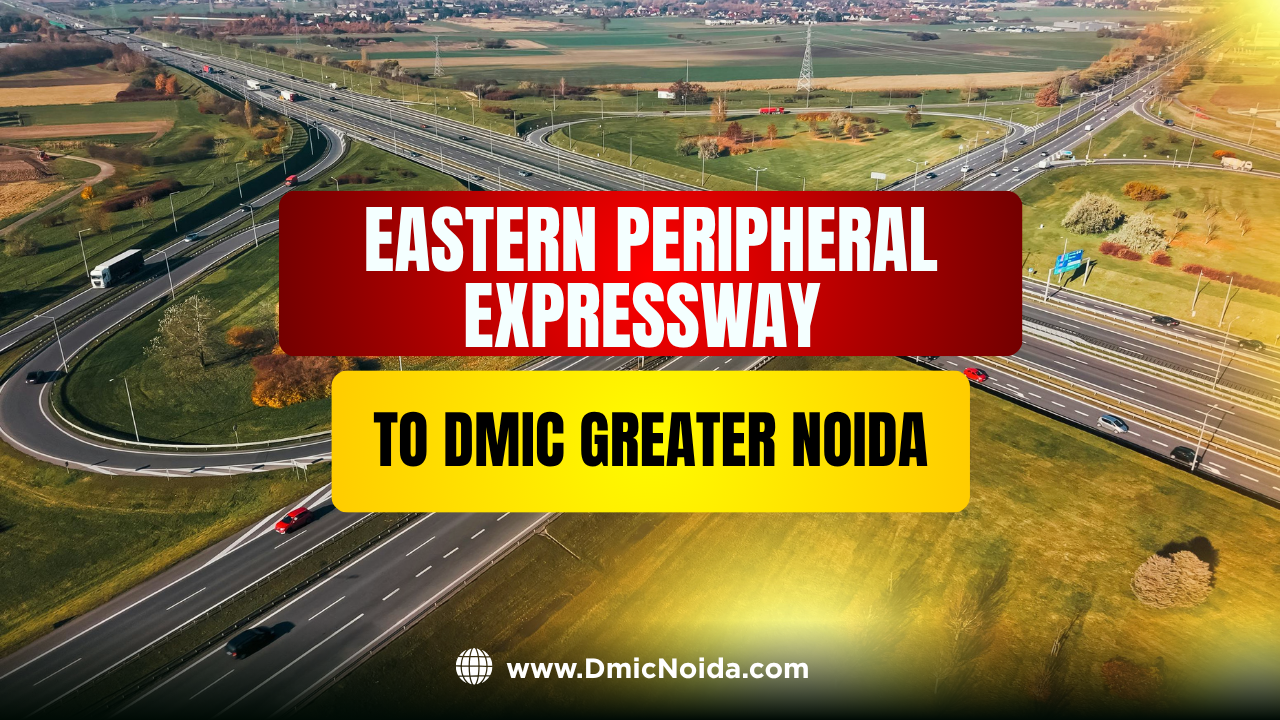
The Eastern Peripheral Expressway is a major orbital road corridor around Delhi designed to facilitate movement around the National Capital Region rather than forcing all traffic through Delhi’s internal road network.
For Greater Noida, its importance lies in the way it connects the region with broader NCR road networks and freight corridors.
For an industrial ecosystem, this matters because road connectivity is an essential part of the movement of:
- Manufacturing inputs
- Finished products
- Commercial vehicles
- Warehousing traffic
- Employees
- Service providers
- Regional commuters
The DMIC township’s direct relationship with the EPE is therefore an important part of its location profile.
DMIC Greater Noida and the Eastern Peripheral Expressway
NICDC states that the Integrated Industrial Township–Greater Noida abuts the Eastern Peripheral Expressway and the Delhi–Howrah railway line.
This creates a combination of road and rail connectivity that is particularly relevant to an industrial location.
Think of the system as a network:
Industrial Township
↓
Eastern Peripheral Expressway
↓
NCR Road Network
and simultaneously:
Industrial Township
↓
Delhi–Howrah Railway
↓
National Rail Network
This multimodal characteristic is one of the reasons industrial townships are planned around multiple forms of transportation rather than a single highway.
Why Rail Connectivity Matters
Road connectivity often receives the most attention in property discussions.
For an industrial corridor, rail can be equally important.
The DMIC township is adjacent to the Delhi–Howrah railway line, while the Dadri railway junction is approximately 9.5 km from the township according to IITGNL’s project information.
The location is also strategically positioned near the Dedicated Freight Corridor ecosystem.
The significance is straightforward:
Road + Rail = Greater logistics flexibility
This can be particularly relevant to manufacturing and distribution businesses.
Dadri Logistics Hub and the Freight Ecosystem
The connectivity story becomes more interesting when Dadri is included.
NICDC describes the Multi Modal Logistics and Transport Hub at Dadri as an approximately 825-acre development positioned near the intersection of the Western and Eastern Dedicated Freight Corridors.
The planned hub includes facilities for:
- Warehousing
- Customs clearance
- Freight handling
- Value-added logistics services
This creates the potential for an interconnected regional logistics ecosystem.
The relationship
DMIC Industrial Township
→ Manufacturing
Dadri Logistics Hub
→ Freight & warehousing
Eastern Peripheral Expressway
→ Road movement
Dedicated Freight Corridors
→ Rail freight
Noida International Airport
→ Air connectivity and cargo potential
Each component performs a different function.
Yamuna Expressway and the Airport Connection
The DMIC region is also part of a broader Greater Noida–Yamuna economic geography.
The NICDC project note lists the Yamuna Expressway among the township’s regional connectivity links, while the broader area is being planned around the economic opportunities associated with Noida International Airport.
This matters because airport development can influence more than passenger travel.
An airport can support:
- Cargo
- Aviation services
- Warehousing
- Hospitality
- Manufacturing
- E-commerce
- Business travel
- Supporting services
However, the actual economic impact depends on how quickly surrounding infrastructure and commercial activity develop.
A Multimodal Connectivity Model
The future development pattern can be understood through the following model:
| Mode | Major Infrastructure | Primary Function |
|---|---|---|
| Road | Eastern Peripheral Expressway | Regional movement |
| Road | Yamuna Expressway | NCR–Yamuna region connectivity |
| Rail | Delhi–Howrah line | Passenger/freight connectivity |
| Rail | Dedicated Freight Corridors | Long-distance freight |
| Logistics | Dadri hub | Warehousing/freight handling |
| Air | Noida International Airport | Passenger/cargo connectivity |
This is why DMIC Greater Noida should not be evaluated only as a residential location.
It is fundamentally part of an economic and logistics network.
Why Connectivity Can Influence Residential Development
Infrastructure does not automatically create housing demand.
But it can contribute to demand when it is accompanied by:
Employment
↓
Population movement
↓
Housing requirements
↓
Retail and services
↓
Urban development
This is particularly relevant for areas surrounding industrial corridors.
As businesses establish operations, employees and supporting service providers may seek housing within reasonable commuting distance.
The Residential Connection
The emergence of residential developments around the DMIC ecosystem therefore has a logical relationship with infrastructure.
Godrej Properties’ 23.2-acre residential development is one recent example of major developer activity within this broader corridor. The transaction was reported with estimated revenue potential exceeding ₹7,000 crore.
The important point is that the residential story is being built around an existing economic and infrastructure narrative rather than in isolation.
Connectivity: Existing vs Planned
This distinction is extremely important for anyone researching property.
| Type | Meaning |
|---|---|
| Operational | Infrastructure currently available |
| Under development | Construction is underway |
| Approved | Project has received relevant approval |
| Proposed | Planning/proposal stage |
| Announced | Publicly announced but implementation may vary |
Homebuyers should not treat a proposed road, metro, airport connection or logistics project as equivalent to infrastructure that is already operational.
This is one of the most important principles when evaluating emerging corridors.
What the Connectivity Advantage Really Means
The term “connectivity advantage” is often used loosely in real estate marketing.
For DMIC Greater Noida, it can be understood more objectively through several factors:
1. Multiple transport modes
Road and rail infrastructure provide alternatives for movement.
2. Industrial proximity
The township is itself designed around industrial development.
3. Logistics infrastructure
Dadri provides a major planned logistics component.
4. NCR access
The Eastern Peripheral Expressway connects the region with the broader NCR road network.
5. Airport-led growth
Noida International Airport adds another major infrastructure component to the wider regional economy.
What Could Change Over the Next Few Years?
Greater Noida’s infrastructure planning is continuing to evolve.
Recent proposals under the Greater Noida Master Plan 2041 include separate freight and passenger routes and a proposed freight connection between a logistics hub and Noida International Airport. The objective is to improve traffic management and freight movement as the region develops.
These are planning proposals and should not be presented as completed infrastructure.
Nevertheless, they illustrate the direction of regional planning: separating passenger movement from freight movement and building a more integrated logistics network.
What This Means for People Researching the Area
For residents:
- Better regional accessibility can expand commuting options.
- Employment centres can become more accessible.
- New services may follow population growth.
For businesses:
- Road and rail connectivity can support supply chains.
- Logistics infrastructure can reduce movement friction.
- Proximity to multiple transport systems can be strategically useful.
For developers:
- Infrastructure can support the development of new residential and commercial communities.
For homebuyers:
- Connectivity should be considered alongside approvals, project quality, infrastructure status and actual travel patterns.
Conclusion
The Eastern Peripheral Expressway is only one component of the DMIC Greater Noida connectivity story.
Its importance becomes clearer when viewed together with the Delhi–Howrah railway line, Dadri logistics ecosystem, Dedicated Freight Corridors, Yamuna Expressway and the wider Noida International Airport region.
NICDC’s description of the Integrated Industrial Township highlights precisely this combination of road, rail and logistics connectivity.
For Greater Noida, the larger story is therefore not simply about one expressway.
It is about the development of a multimodal economic corridor where industrial activity, logistics, transportation and residential development can increasingly interact.
Frequently Asked Questions
Is DMIC Greater Noida connected to the Eastern Peripheral Expressway?
Yes. NICDC states that the Integrated Industrial Township–Greater Noida abuts the Eastern Peripheral Expressway.
How far is the DMIC township from Pari Chowk?
NICDC lists the township at approximately 11 km from Pari Chowk.
Why is Dadri important?
Dadri is associated with a major multimodal logistics hub and the Dedicated Freight Corridor network, making it strategically relevant to the region’s freight ecosystem.
Does connectivity guarantee property appreciation?
No. Connectivity is one factor among many. Project approvals, supply, demand, employment, infrastructure delivery and broader market conditions also matter.
buying property DMIC Greater Noida Dadri DFC Dadri logistics hub Dadri MMLH DMIC 2030 DMIC companies in Greater Noida DMIC connectivity DMIC corridor investment DMIC electronics industry DMIC employment opportunities DMIC Greater Noida DMIC Greater Noida 2030 DMIC Greater Noida 2040 DMIC Greater Noida airport DMIC Greater Noida apartments DMIC Greater Noida companies DMIC Greater Noida connectivity DMIC Greater Noida development DMIC Greater Noida industries DMIC Greater Noida investment DMIC Greater Noida jobs DMIC Greater Noida logistics DMIC Greater Noida property DMIC Greater Noida residential demand DMIC Integrated Township DMIC real estate investment Godrej DMIC Greater Noida Godrej Global Business City Godrej Properties Greater Noida Godrej residential development Greater Noida industrial corridor Greater Noida industrial development Greater Noida industrial investment Greater Noida logistics hub Greater Noida logistics infrastructure Greater Noida manufacturing hub Greater Noida warehousing Hero Homes DMIC Contact Number Hero Homes DMIC Floor Plans Hero Homes DMIC Master Plans Hero Homes DMIC Payment Plan Integrated Industrial Township Greater Noida logistics companies Greater Noida manufacturing Greater Noida MMLH Greater Noida