The Link Between Jobs and Housing
Residential development does not happen independently of economic development.
When new industrial, logistics and commercial centres emerge, they can create demand for a supporting population.
That population needs:
- Homes
- Schools
- Healthcare
- Retail
- Restaurants
- Transportation
- Recreation
- Daily services
This relationship is particularly relevant to Greater Noida, where industrial corridors, logistics infrastructure and airport-led development are increasingly becoming part of the region’s long-term planning framework.
The important question is not whether every new infrastructure project automatically increases property prices.
The more useful question is:
Can economic development create a larger and more diverse residential ecosystem?
Greater Noida’s Industrial Base Is Expanding
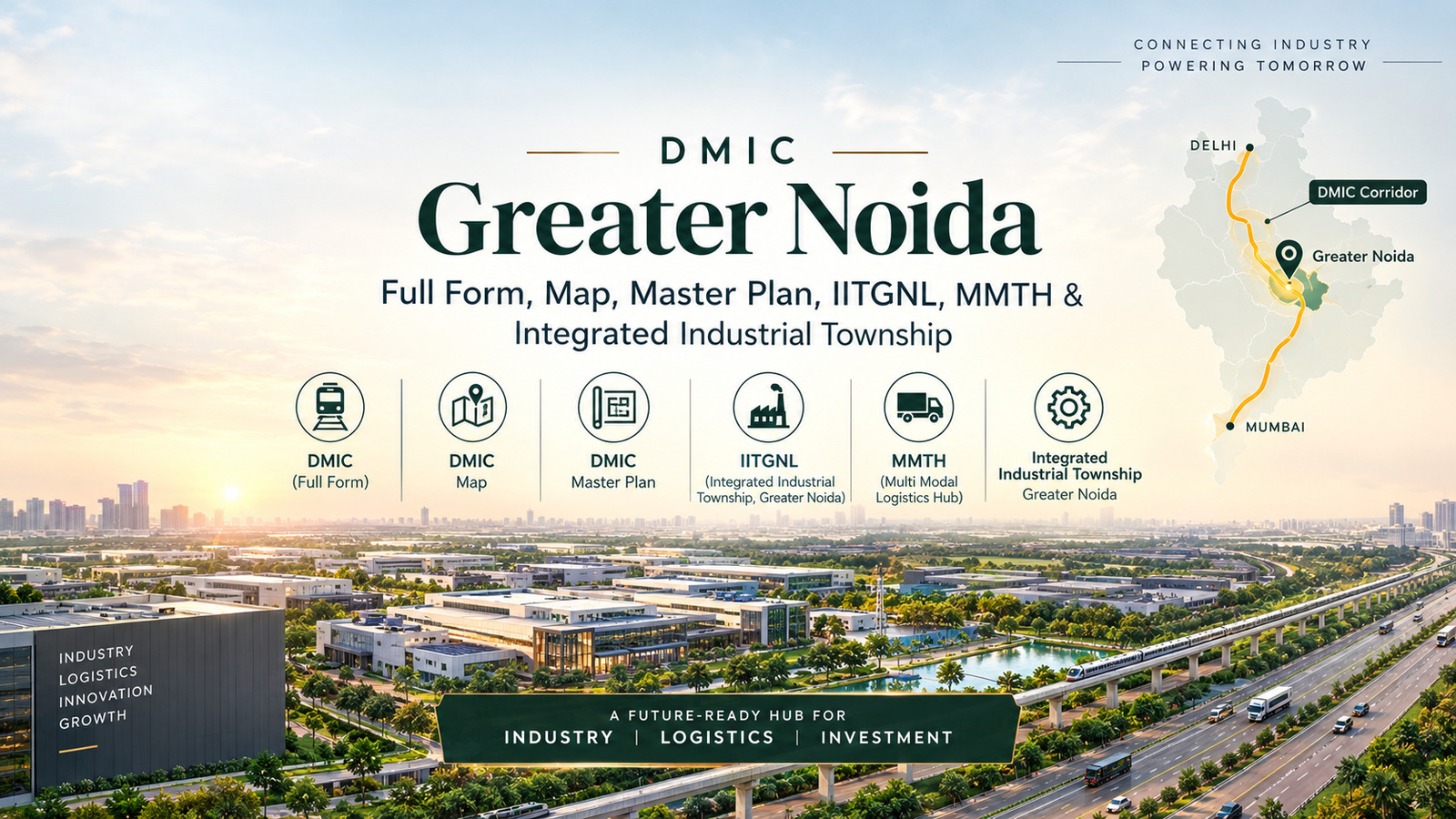
The DMIC Integrated Industrial Township–Greater Noida is a major component of this story.
NICDC describes the township as a 747-acre flagship DMIC project, with focus sectors including white goods, electronics, mobile manufacturing, biotechnology, R&D, general engineering and robotics.
These are industries that can require different categories of workers, managers, technical specialists, service providers and supporting businesses.
That creates the possibility of a more diversified employment base.
The Employment-to-Housing Relationship
A simple way to understand the relationship is:
Industrial investment
↓
New businesses
↓
Direct employment
↓
Supporting employment
↓
Population movement
↓
Housing demand
↓
Retail + healthcare + education + services
This is not an automatic or guaranteed chain.
The actual outcome depends on how much industrial capacity becomes operational, how many jobs are created, where employees live and how effectively transport infrastructure supports commuting.
But the mechanism is well established in urban development.
DMIC Greater Noida: Why the Location Is Different
Traditional residential expansion can happen because a city is growing.
Industrial-corridor residential development has another potential driver:
employment proximity.
The DMIC township is designed around industrial activity rather than being exclusively residential.
NICDC identifies existing operational companies and sectors including electronics, white goods and engineering-related industries.
This creates a fundamentally different development equation.
| Traditional Residential Growth | Industrial-Corridor Growth |
|---|---|
| Population growth | Population + employment growth |
| Housing demand | Housing + workforce demand |
| Local services | Industrial + residential services |
| Road connectivity | Road + rail + logistics |
| Residential focus | Economic ecosystem |
The Role of the Dadri Logistics Ecosystem
Logistics can be a major employment generator in its own right.
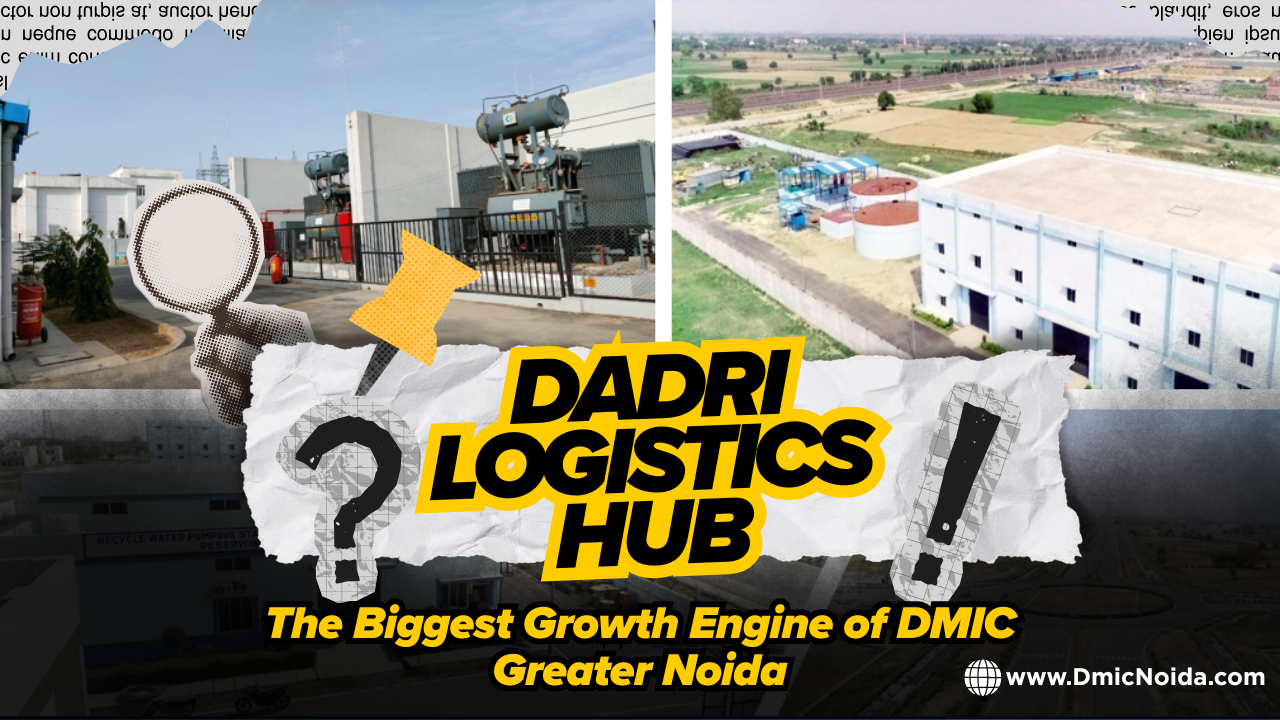
The planned Multi Modal Logistics and Transport Hub at Dadri spans approximately 825 acres and is positioned near the intersection of the Eastern and Western Dedicated Freight Corridors, according to NICDC.
The hub is designed around:
- Warehousing
- Freight handling
- Customs clearance
- Value-added logistics
- Supply-chain activity
A logistics ecosystem can generate demand for more than warehouse workers.
It can support:
- Transport operators
- Fleet management
- Supply-chain professionals
- Equipment maintenance
- Security
- Food services
- Administrative staff
- Packaging
- Distribution
- Technical services
That wider employment ecosystem can influence where people choose to live.
Noida International Airport Adds Another Layer
Airport-led development can create another employment and business ecosystem.
The wider Yamuna region is being planned around the economic opportunities associated with Noida International Airport and regional economic corridors. YEIDA’s Master Plan 2041 explicitly discusses airport-city development, economic opportunities and housing requirements, including affordable housing for industrial workers.
Airport-related economic activity can include:
- Aviation
- Cargo
- Warehousing
- Hospitality
- Retail
- Ground services
- Maintenance
- Logistics
- Business travel
- Supporting industries
Again, this does not mean that all of these sectors will develop simultaneously.
It does mean that airport infrastructure can become an additional economic anchor.
The Airport + Industrial + Logistics Model
Greater Noida’s emerging regional structure can therefore be viewed as three connected engines.
| Economic Engine | Potential Function |
|---|---|
| DMIC Industrial Township | Manufacturing & industrial activity |
| Dadri Logistics Ecosystem | Freight, warehousing & distribution |
| Noida International Airport | Aviation, cargo & regional connectivity |
When these three systems develop alongside residential communities, they can create a more integrated urban economy.
Why Residential Demand Could Increase
There are several possible demand drivers.
1. Employees
People working in industrial and logistics facilities may prefer homes with reasonable commuting access.
2. Managers and professionals
Manufacturing, engineering, logistics and technology businesses can attract skilled professionals who may seek higher-quality housing.
3. Supporting businesses
Industrial ecosystems create secondary businesses that also require employees.
4. Entrepreneurs
Supply-chain and service ecosystems can create opportunities for smaller businesses.
5. Rental demand
People relocating for work may initially prefer rental housing before purchasing.
6. End-user demand
As families settle into the region, demand can gradually shift toward ownership.
Why Housing Supply Needs to Follow Employment
An industrial corridor cannot function efficiently if its workforce has to travel excessive distances every day.
This is one reason modern economic zones increasingly consider residential and commercial development as part of the wider urban ecosystem.
NICDC’s planning material for the Greater Noida township itself refers to dedicated areas for industrial, residential, commercial and green uses.
That is significant.
It shows that the long-term concept is not simply a collection of factories.
It is a planned urban ecosystem.
The Emerging Urban Ecosystem
The potential development pattern can be represented as:
Industry
→ Jobs
→ Population
→ Housing
→ Retail
→ Schools
→ Healthcare
→ Hospitality
→ Transportation
→ Larger urban economy
This is why residential development can be an important supporting component of an industrial corridor.
Where Godrej Properties Fits Into the Story
Godrej Properties’ recent 23.2-acre land acquisition inside the DMIC Integrated Township provides an interesting real-world example of this changing development landscape.
The proposed residential development has been reported with estimated revenue potential exceeding ₹7,000 crore.
Rather than viewing the project only as a new residential launch, it can be viewed as an example of how large developers are beginning to participate in the broader DMIC Greater Noida ecosystem.
The development is associated with the Godrej Global Business City / Godrej DMIC Greater Noida identity in market-facing information.
Its significance, however, is connected to the location itself:
23.2-acre residential development
747-acre DMIC industrial township
Eastern Peripheral Expressway
Delhi–Howrah railway
Dadri logistics ecosystem
wider airport-led regional development
This combination creates a much broader story than a standalone housing project.
Why Connectivity Matters to Residential Demand
Housing demand is influenced not only by where jobs are located but also by how easily people can travel between home and work.
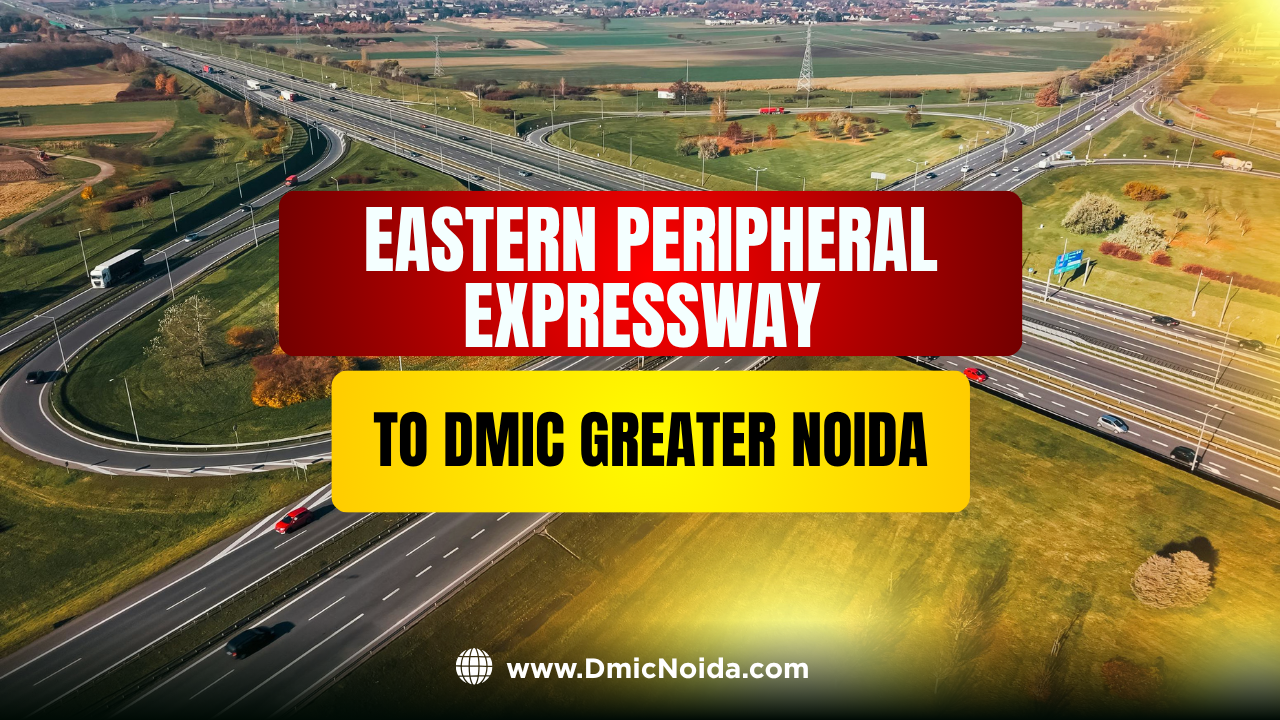
The DMIC township benefits from proximity to the Eastern Peripheral Expressway and Delhi–Howrah railway line. NICDC also highlights its proximity to Boraki and the Dadri logistics hub.
This creates several potential commuting patterns.
Local commuting
Home → Industrial township
Regional commuting
Home → Greater Noida / Noida / Ghaziabad / NCR
Logistics movement
Industrial area → Logistics hub → Freight network
Airport-related movement
Residential areas → Airport → Regional and national destinations
The strength of each route will depend on actual infrastructure, traffic and future development.
Residential Demand Does Not Mean Automatic Price Appreciation
This distinction deserves special attention.
A growing industrial corridor can potentially increase housing demand, but that does not guarantee that every property will appreciate.
Property outcomes depend on:
- Location
- Developer quality
- Project execution
- Supply
- Demand
- Infrastructure delivery
- Pricing
- Financing conditions
- Local employment
- Rental demand
- Regulatory approvals
- Broader economic conditions
Therefore, infrastructure should be treated as a growth factor, not a guarantee of returns.
What Homebuyers Should Evaluate
People considering residential property around emerging industrial corridors should examine the fundamentals.
| Factor | What to Check |
|---|---|
| Developer | Track record and credentials |
| Legal status | Title and approvals |
| RERA | Registration where applicable |
| Connectivity | Existing vs proposed infrastructure |
| Employment | Actual operational employment centres |
| Social infrastructure | Schools, healthcare and retail |
| Construction | Delivery track record |
| Pricing | Comparison with competing projects |
| Rental market | Existing demand and supply |
| Future infrastructure | Officially planned vs speculative |
This approach is particularly important in rapidly developing corridors, where marketing narratives can sometimes run ahead of actual infrastructure.
Greater Noida’s Broader Development Direction
Recent planning developments also point toward greater attention to freight and passenger movement.
GNIDA is considering proposals under Master Plan 2041 for separate freight and passenger routes, including a potential elevated freight connection between a proposed logistics hub and Noida International Airport.
These proposals are not completed infrastructure and should be treated accordingly.
However, they illustrate a broader planning objective:
Greater Noida is increasingly being planned as a regional economic and logistics centre rather than simply a residential extension of Delhi-NCR.
That distinction is important when assessing future housing demand.
Why the Next Phase Could Be Different
Greater Noida’s earlier growth was strongly associated with planned residential sectors, educational institutions, expressways and urban expansion.
The emerging phase adds another dimension:
Manufacturing + Logistics + Airport + Residential Development
That could make the region more economically diversified.
A diversified economic base can potentially create more resilient housing demand because residential requirements are not dependent on only one employment sector.
The potential rise in residential demand around Greater Noida’s industrial corridors is best understood through the relationship between employment, infrastructure and urbanisation.
The DMIC Integrated Industrial Township provides an industrial foundation. The Dadri logistics ecosystem adds a freight and warehousing dimension. Noida International Airport adds another major regional infrastructure component. Expressways and rail connectivity connect these economic nodes to the wider NCR.
Residential development then becomes an important supporting component of the ecosystem.
Godrej Properties’ 23.2-acre entry into the DMIC Integrated Township is one of the clearest recent examples of this trend.
But the long-term residential story will ultimately depend on something more fundamental than announcements:
actual industrial activity, jobs, infrastructure delivery, population growth and the quality of urban development.
For homebuyers and researchers, that makes Greater Noida’s industrial corridors worth watching—not simply as property markets, but as evolving economic regions.
Frequently Asked Questions
Why can industrial development increase residential demand?
Industrial development can create direct and indirect employment. Employees, managers, service providers and businesses may subsequently require housing and supporting services.
Is DMIC Greater Noida only an industrial area?
The wider Integrated Industrial Township is planned as an integrated ecosystem with industrial, residential, commercial and green components.
How does the Dadri logistics hub affect housing demand?
A large logistics ecosystem can create employment and supporting businesses, which can contribute to housing requirements if activity becomes operational at scale.
Does the Noida International Airport guarantee property appreciation?
No. Airport infrastructure can be an important economic driver, but property performance depends on many factors including actual operations, employment, supply, pricing and market conditions.
Why is Godrej Properties’ DMIC development relevant?
Godrej Properties’ acquisition of a 23.2-acre parcel within the DMIC Integrated Township demonstrates growing participation by major developers in the emerging corridor. The proposed development has been reported with estimated revenue potential exceeding ₹7,000 crore.
buying property DMIC Greater Noida Dadri DFC Dadri logistics hub Dadri MMLH DMIC 2030 DMIC companies in Greater Noida DMIC connectivity DMIC corridor investment DMIC electronics industry DMIC employment opportunities DMIC Greater Noida DMIC Greater Noida 2030 DMIC Greater Noida 2040 DMIC Greater Noida airport DMIC Greater Noida apartments DMIC Greater Noida companies DMIC Greater Noida connectivity DMIC Greater Noida development DMIC Greater Noida industries DMIC Greater Noida investment DMIC Greater Noida jobs DMIC Greater Noida logistics DMIC Greater Noida property DMIC Greater Noida residential demand DMIC Integrated Township DMIC real estate investment Godrej DMIC Greater Noida Godrej Global Business City Godrej Properties Greater Noida Godrej residential development Greater Noida industrial corridor Greater Noida industrial development Greater Noida industrial investment Greater Noida logistics hub Greater Noida logistics infrastructure Greater Noida manufacturing hub Greater Noida warehousing Hero Homes DMIC Contact Number Hero Homes DMIC Floor Plans Hero Homes DMIC Master Plans Hero Homes DMIC Payment Plan Integrated Industrial Township Greater Noida logistics companies Greater Noida manufacturing Greater Noida MMLH Greater Noida