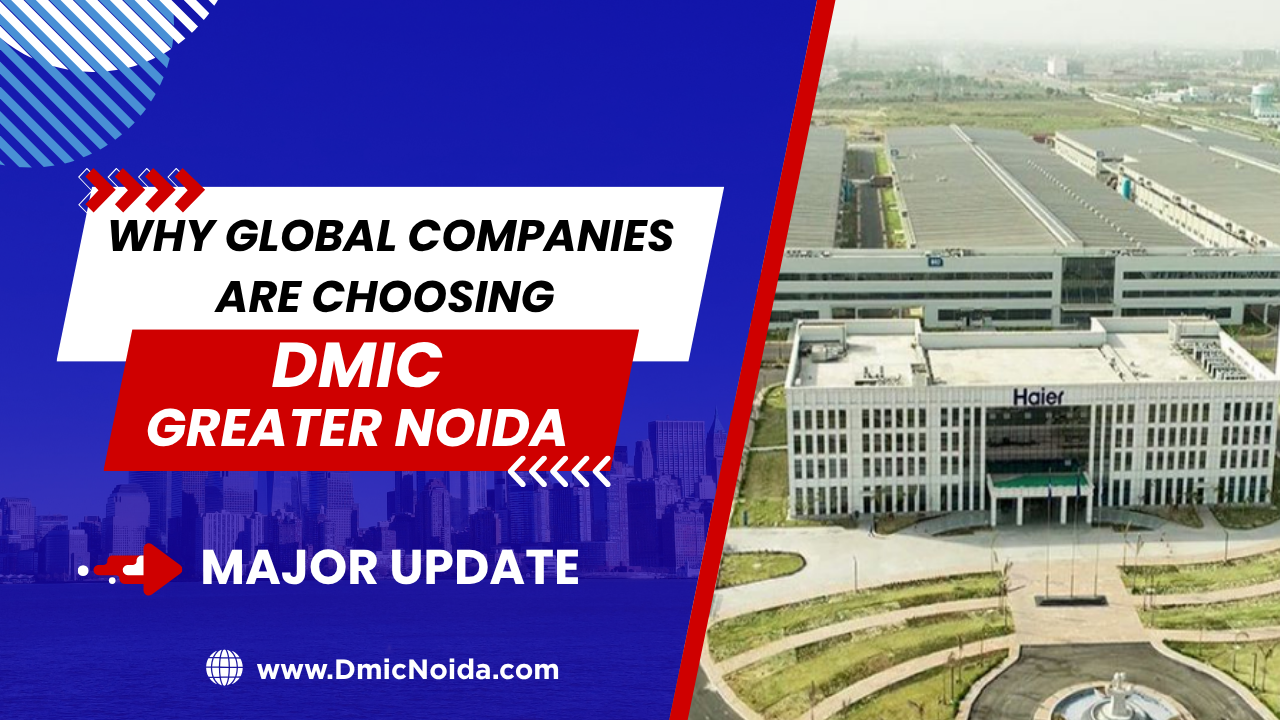
Discover why global companies are considering DMIC Greater Noida for manufacturing and logistics, with DFC connectivity, lower logistics costs, NCR access and export opportunities.
The Delhi-Mumbai Industrial Corridor (DMIC) is being developed as one of India’s major industrial and logistics networks, connecting manufacturing regions with major markets, ports, freight infrastructure and economic centres. Within the Uttar Pradesh section of DMIC, the Greater Noida–Dadri region is emerging as an important industrial and logistics destination.
For global companies evaluating India as a manufacturing, distribution or export base, DMIC Greater Noida offers a combination of industrial infrastructure, Dedicated Freight Corridor connectivity, NCR market access and multimodal logistics infrastructure.
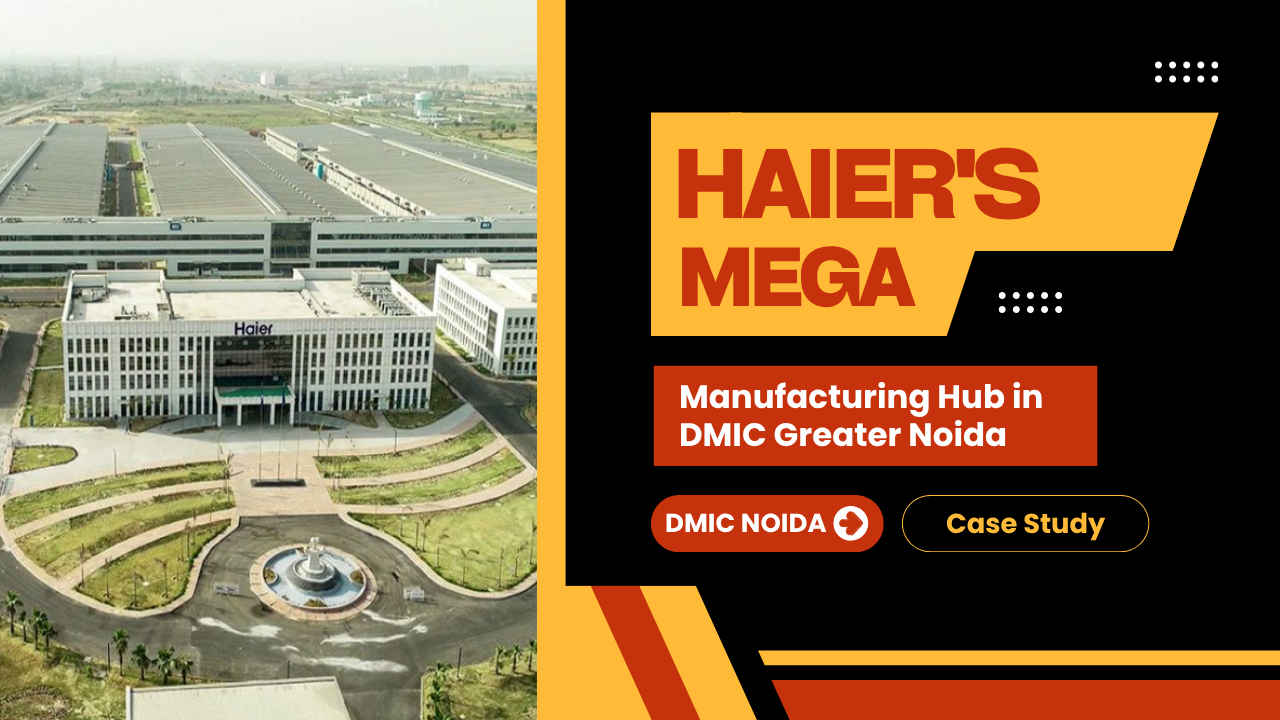
The region is supported by projects such as the Integrated Industrial Township at Greater Noida (IITGN), the Dadri–Noida–Ghaziabad Investment Region (DNGIR), the Multi-Modal Logistics Hub (MMLH) and the Multi-Modal Transport Hub (MMTH) at Boraki.
Invest UP identifies the Integrated Industrial Township, DNGIR, Boraki Integrated Transport Hub and the Integrated Multi-Modal Logistics Hub near Dadri among the major projects along the DMIC–Western Dedicated Freight Corridor in Uttar Pradesh.
For companies that depend on efficient movement of raw materials, components and finished products, this combination can become an important competitive advantage.
What Makes DMIC Greater Noida Attractive to Global Companies?
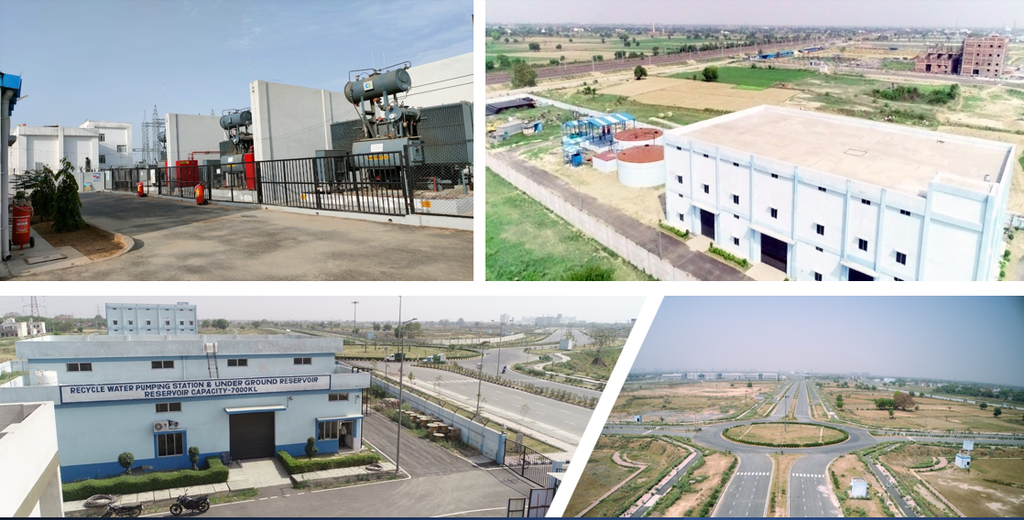
The biggest advantage of Greater Noida’s DMIC ecosystem is that companies are not dependent on a single transportation network.
The region brings together:
- Dedicated Freight Corridors
- National and regional highways
- Eastern Peripheral Expressway
- Noida-Greater Noida Expressway
- Yamuna Expressway
- Industrial townships
- Logistics hubs
- Warehousing infrastructure
- NCR consumer markets
- Rail connectivity
- Airports serving the wider NCR region
- Planned multimodal transport infrastructure
This creates a connected industrial ecosystem rather than an isolated industrial estate.
For international businesses, this matters because the cost and reliability of moving goods can have a direct impact on manufacturing costs, inventory planning, delivery times and export competitiveness.
1. Lower Logistics Cost Can Improve Business Competitiveness
Logistics is one of the most important factors for companies selecting a manufacturing or distribution location.
A factory may have inexpensive land and labour, but if raw materials take too long to reach the facility or finished goods require expensive road transportation over long distances, the overall operating cost can increase.
This is where DMIC Greater Noida has a strategic advantage.
The development of dedicated freight infrastructure and multimodal logistics facilities around Greater Noida and Dadri is designed to make movement of industrial cargo more efficient.
Invest UP describes the Greater Noida Multi-Modal Logistics Hub as being strategically connected to the Eastern Peripheral Expressway, NH 91, Noida-Greater Noida Expressway, Yamuna Expressway and the Eastern and Western Dedicated Freight Corridors. The proposed logistics hub is intended to support storage, transfer, container handling, packaging and other value-added logistics services.
Why This Matters to Manufacturers
A manufacturing company typically has several logistics requirements:
Inbound logistics
Raw materials and components have to reach the factory.
Internal supply chain
Materials must move between suppliers, warehouses and manufacturing facilities.
Outbound logistics
Finished products need to reach distributors, retailers, customers or ports.
Export logistics
Containers need to move efficiently from manufacturing facilities to ports and international supply chains.
A well-connected industrial location can reduce unnecessary road movement and improve supply-chain planning.
2. Dedicated Freight Corridor Connectivity
One of the biggest strategic advantages of the Greater Noida–Dadri region is its relationship with India’s Dedicated Freight Corridor network.
The Western Dedicated Freight Corridor connects the Dadri region with the western side of India and ultimately the Jawaharlal Nehru Port near Mumbai.
DFCCIL describes the Western DFC as a 1,504-km double-line electrified freight corridor connecting JNPT with Dadri, while the Eastern Dedicated Freight Corridor connects the eastern and northern freight network. The two corridors are linked near Dadri.
This gives companies located around Greater Noida and Dadri access to an important freight transportation network.
Why DFC Connectivity Is Important
Traditional freight movement often depends heavily on road transportation.
Dedicated freight infrastructure creates another option for moving large volumes of cargo.
For industries handling:
- Automotive components
- Electronics
- Engineering goods
- Consumer products
- Machinery
- Textiles
- Industrial equipment
- Packaged goods
- Export cargo
efficient freight connectivity can become a major location-selection factor.
The Dadri region is particularly significant because it provides a connection point between the eastern and western freight networks.
DFCCIL documentation specifically identifies Dadri as the linkage point between the Eastern and Western Dedicated Freight Corridors.
3. NCR Market Access
Another major advantage is proximity to the National Capital Region (NCR).
Greater Noida is positioned within the wider Delhi-NCR economic ecosystem, providing businesses with access to a large concentration of consumers, companies, suppliers, institutions and service providers.
For global companies entering the Indian market, this can be particularly valuable.
A manufacturing facility in Greater Noida can potentially serve markets across:
- Delhi
- Noida
- Greater Noida
- Ghaziabad
- Gurgaon
- Faridabad
- Meerut
- Western Uttar Pradesh
- Rajasthan
- Haryana
- Punjab and other northern markets
This gives companies an opportunity to combine manufacturing + warehousing + distribution within one strategically positioned region.
Access to a Large Consumer Base
NCR is one of India’s most important economic regions.
For consumer-facing businesses, proximity to NCR can help shorten the distance between manufacturing facilities, distribution centres and customers.
For B2B companies, the region also provides access to a large network of:
- Corporate offices
- Industrial companies
- MSMEs
- Technology businesses
- Automobile companies
- Engineering companies
- Logistics operators
- Warehousing companies
- Service providers
This ecosystem can support both domestic expansion and international businesses establishing an India presence.
4. Strong Road Connectivity
Although DFC connectivity is a major advantage, road infrastructure remains equally important for last-mile and regional transportation.
Greater Noida’s DMIC ecosystem is connected with major road corridors including the:
Eastern Peripheral Expressway
The Eastern Peripheral Expressway provides an important orbital connection around Delhi and improves movement between different parts of the NCR and northern India.
Noida-Greater Noida Expressway
The Noida-Greater Noida Expressway provides direct connectivity between Noida and Greater Noida and connects the industrial region with the wider NCR.
Yamuna Expressway
The Yamuna Expressway provides connectivity towards Agra and other parts of Uttar Pradesh and serves as an important north-south/east-south regional connection.
NH-91
The Delhi–Aligarh route and surrounding national highway network provide additional connectivity towards northern and central Indian markets.
The Uttar Pradesh government’s Invest UP platform highlights the strategic positioning of Greater Noida’s logistics infrastructure near the Eastern Peripheral Expressway, NH 91, Noida-Greater Noida Expressway and Yamuna Expressway, alongside the two freight corridors.
5. Export Opportunities From Greater Noida
Global companies are not only looking for locations from which they can sell within India.
They also want manufacturing locations capable of serving international markets.
This is where the DMIC model becomes particularly important.
The corridor is designed around industrial development, logistics infrastructure and connectivity between production centres and major freight routes.
For export-oriented manufacturers, the Greater Noida–Dadri region can provide access to the wider freight network connecting northern India with western ports.
From Factory to International Market
A simplified supply-chain model could look like:
Manufacturing Facility
↓
Industrial Warehouse
↓
Multimodal Logistics Hub
↓
Dedicated Freight Corridor / Road Network
↓
Western India Logistics Network
↓
Port
↓
International Market
The availability of multiple transportation options can give exporters greater flexibility when planning their supply chains.
6. Multi-Modal Logistics Hub Can Strengthen Export Infrastructure
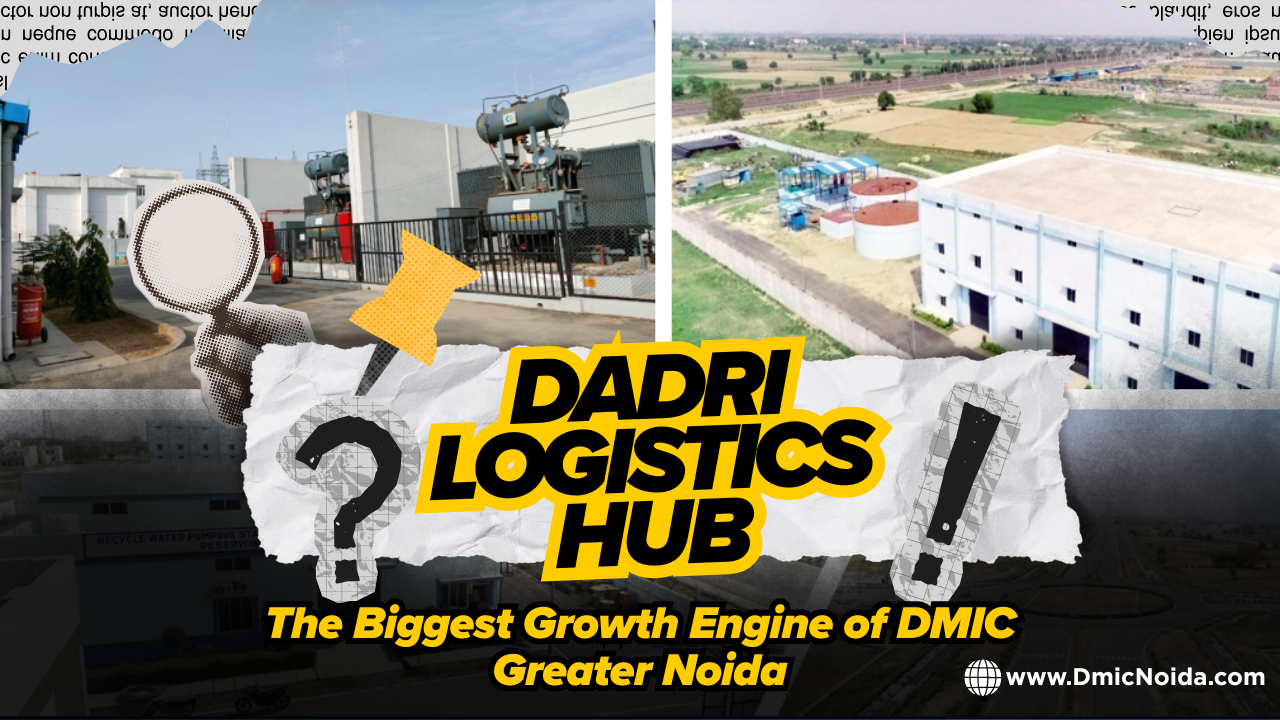
The proposed Multi-Modal Logistics Hub (MMLH) near Dadri is an important component of the Greater Noida industrial ecosystem.
The objective is to integrate different modes of transportation and provide logistics services closer to industrial production.
According to Invest UP, the MMLH is planned to facilitate storage and transfer of goods to and from the Dedicated Freight Corridors, with services including container handling, packaging and cargo optimisation.
This is particularly relevant for companies that depend on containerised cargo.
Instead of treating transportation, warehousing, packaging and cargo handling as completely separate activities, multimodal logistics infrastructure can bring several functions into one ecosystem.
7. DMIC Greater Noida Can Support Manufacturing Clusters
Global companies generally prefer locations where they can build relationships with suppliers, vendors and supporting industries.
An industrial ecosystem can create advantages that a standalone factory cannot.
Greater Noida’s DMIC development is intended to create an environment where industrial companies can operate alongside supporting businesses and logistics infrastructure.
This can encourage the development of:
- Component suppliers
- Contract manufacturers
- Warehousing companies
- Packaging companies
- Logistics providers
- Engineering services
- Maintenance companies
- Technology providers
- Research and development facilities
- Skilled workforce networks
As more businesses enter the region, the potential for industrial clustering can increase.
8. Plug-and-Play Industrial Infrastructure
Infrastructure availability is another factor that can influence corporate location decisions.
The Integrated Industrial Township at Greater Noida has been planned as a smart industrial township under the DMIC framework.
The development includes planned industrial infrastructure and utility systems designed to support businesses.
The township’s infrastructure includes:
- Planned industrial plots
- Wide internal roads
- Utility networks
- Water supply
- Sewerage infrastructure
- Power infrastructure
- Optical fibre connectivity
- Smart utility monitoring
- ICT infrastructure
- CCTV and security systems
- Automated waste collection systems
- Underground utility ducts
This type of infrastructure can reduce the need for every industrial unit to independently develop basic infrastructure.
9. Smart Utilities for Modern Industry
Modern manufacturing increasingly depends on reliable utilities and digital infrastructure.
The Integrated Industrial Township Greater Noida has been designed around smart infrastructure concepts, including SCADA-based monitoring and automated utility systems.
The township’s planned infrastructure includes a 24×7 water supply system, power distribution infrastructure, underground utility networks, optical fibre connectivity and integrated ICT systems.
For technology-driven industries, these facilities can support more efficient industrial operations.
Smart Infrastructure Can Include
SCADA
Centralised monitoring and control of utility infrastructure.
Optical Fibre
Digital connectivity for businesses and industrial operations.
Automated Waste Collection
A planned system for efficient waste movement.
24×7 Water Infrastructure
Designed to support industrial and commercial requirements.
Integrated Security
CCTV and command-and-control infrastructure can strengthen monitoring across the township.
10. Access to Skilled Talent Through NCR
Infrastructure alone does not create a successful industrial location.
Companies also need people.
The Greater Noida–Noida–Delhi NCR ecosystem provides access to a large workforce across engineering, management, technology, manufacturing, logistics and services.
The broader NCR region has educational institutions, universities, technical institutes and professional services that can support industrial businesses.
This is particularly useful for companies establishing:
- R&D centres
- Engineering offices
- Manufacturing units
- Corporate offices
- Logistics operations
- Technology centres
- Shared service operations
The combination of industrial infrastructure and access to the wider NCR workforce can make the region attractive to companies seeking both production and management capabilities.
11. A Strategic Location for India-Focused Global Businesses
A company entering India typically evaluates several factors before establishing a facility.
These can include:
- Market size
- Logistics cost
- Availability of land
- Infrastructure
- Workforce
- Supplier ecosystem
- Access to ports
- Domestic market connectivity
- Government policies
- Future scalability
DMIC Greater Noida brings several of these factors together.
Its strategic advantage is not based on one highway or one industrial project.
Instead, the opportunity comes from the combination of industrial infrastructure + NCR access + freight connectivity + logistics development + multimodal transportation.
12. Why Export-Oriented Companies May Look at DMIC Greater Noida
For export-oriented businesses, transportation efficiency can become particularly important.
Companies may need to move products from manufacturing plants to ports while maintaining predictable delivery schedules.
The Western DFC’s connection between Dadri and the western port network is therefore strategically important.
The Western DFC extends from Dadri towards JNPT through the western states, creating a dedicated freight connection between the northern industrial region and India’s western maritime gateway.
This can strengthen the case for companies manufacturing products in northern India while serving overseas markets.
13. Greater Noida’s Role in the Larger DMIC Ecosystem
It is important to understand that DMIC Greater Noida is not a single industrial park.
It is a broader regional development ecosystem.
Several projects work together:
Integrated Industrial Township Greater Noida
Industrial and manufacturing infrastructure.
DNGIR
A larger planned investment region around Dadri, Noida and Ghaziabad.
MMLH
Multimodal logistics infrastructure focused on cargo movement, storage and logistics services.
MMTH Boraki
Planned multimodal transport infrastructure integrating transportation and commercial activities.
Dedicated Freight Corridors
Freight railway infrastructure connecting northern India with major industrial and port regions.
Together, these projects can create a connected industrial ecosystem rather than isolated developments.
Invest UP lists the Boraki Integrated Transport Hub, DNGIR, Integrated Industrial Township and Integrated Multi-Modal Logistics Hub among the key projects along the DMIC–WDFC network in Uttar Pradesh.
14. Why the Location Could Become More Important Over Time
Industrial location decisions are generally long-term decisions.
A company establishing a manufacturing facility may operate from the same location for decades.
Therefore, companies do not only evaluate today’s infrastructure. They also consider the infrastructure pipeline and future industrial ecosystem.
The Greater Noida region is being developed through multiple interconnected projects involving industrialisation, logistics, freight transportation and multimodal connectivity.
The Uttar Pradesh government’s logistics strategy specifically links DMIC and AKIC development with industrial clusters, multimodal logistics facilities, freight corridors and other transportation infrastructure.
This creates the possibility of increasing network effects as infrastructure and industrial activity develop.
15. DMIC Greater Noida and the Future of Global Manufacturing in India
India is increasingly competing for manufacturing and supply-chain investments.
Companies looking to diversify their production networks need locations that can support both domestic demand and exports.
DMIC Greater Noida has several characteristics that align with this requirement:
For Manufacturing
Industrial infrastructure and planned industrial areas.
For Logistics
Multimodal connectivity and dedicated freight infrastructure.
For Domestic Sales
Direct access to NCR and northern Indian markets.
For Exports
Connectivity towards the western freight and port network.
For Expansion
Large-scale regional industrial development.
For Workforce
Access to the broader NCR talent pool.
This combination could make Greater Noida an increasingly important destination for companies establishing or expanding operations in northern India.
Conclusion: Why Global Companies Are Looking at DMIC Greater Noida
The biggest strength of DMIC Greater Noida is connectivity.
Companies can potentially benefit from access to the NCR market while being connected to major expressways, rail infrastructure, Dedicated Freight Corridors and planned multimodal logistics facilities.
For manufacturers, this can mean better access to suppliers and customers.
For logistics companies, it can create opportunities around warehousing, cargo handling and distribution.
For exporters, connectivity towards the western freight and port network can strengthen supply-chain planning.
And for international companies entering India, the combination of industrial infrastructure, logistics connectivity, NCR market access and export potential makes the Greater Noida–Dadri region an important location to watch.
The region should therefore be viewed not simply as another industrial area, but as part of a larger infrastructure-led industrial ecosystem being developed around DMIC and the Dedicated Freight Corridor network.
Key Advantages of DMIC Greater Noida
| Advantage | Importance for Companies |
|---|---|
| DFC Connectivity | Efficient access to dedicated freight infrastructure |
| NCR Market Access | Access to one of India’s largest economic regions |
| Expressways | Faster road connectivity for regional distribution |
| MMLH | Planned multimodal cargo and logistics infrastructure |
| Industrial Township | Planned industrial infrastructure and utilities |
| Export Connectivity | Freight network towards western ports |
| Supplier Ecosystem | Potential for industrial clustering |
| Skilled Workforce | Access to the wider NCR talent pool |
| Smart Infrastructure | Digital and utility management systems |
| Future Expansion | Part of a larger DMIC industrial ecosystem |
Frequently Asked Questions
Why are global companies interested in DMIC Greater Noida?
Global companies can benefit from the region’s combination of industrial infrastructure, NCR market access, Dedicated Freight Corridor connectivity, expressways and planned multimodal logistics facilities.
How does DFC connectivity benefit companies?
Dedicated Freight Corridors provide dedicated freight railway infrastructure. Greater Noida and Dadri are strategically important because the Western and Eastern freight networks connect around Dadri.
Can DMIC Greater Noida support export-oriented businesses?
Yes. The Greater Noida–Dadri region’s freight connectivity provides a potential supply-chain route towards western India and major ports, while multimodal logistics infrastructure is being developed to support cargo handling and movement.
What is the role of the Multi-Modal Logistics Hub?
The MMLH near Dadri is planned to support storage and transfer of goods, container handling, packaging, cargo optimisation and connections with the Dedicated Freight Corridors.
Is DMIC Greater Noida suitable only for large multinational companies?
No. The broader ecosystem can support manufacturers, logistics companies, suppliers, MSMEs, warehouses, technology businesses and other industrial enterprises. The exact suitability depends on the company’s land, infrastructure, workforce and logistics requirements.
buying property DMIC Greater Noida Dadri DFC Dadri logistics hub Dadri MMLH DMIC 2030 DMIC companies in Greater Noida DMIC connectivity DMIC corridor investment DMIC electronics industry DMIC employment opportunities DMIC Greater Noida DMIC Greater Noida 2030 DMIC Greater Noida 2040 DMIC Greater Noida airport DMIC Greater Noida apartments DMIC Greater Noida companies DMIC Greater Noida connectivity DMIC Greater Noida development DMIC Greater Noida industries DMIC Greater Noida investment DMIC Greater Noida jobs DMIC Greater Noida logistics DMIC Greater Noida property DMIC Greater Noida residential demand DMIC Integrated Township DMIC real estate investment Godrej DMIC Greater Noida Godrej Global Business City Godrej Properties Greater Noida Godrej residential development Greater Noida industrial corridor Greater Noida industrial development Greater Noida industrial investment Greater Noida logistics hub Greater Noida logistics infrastructure Greater Noida manufacturing hub Greater Noida warehousing Hero Homes DMIC Contact Number Hero Homes DMIC Floor Plans Hero Homes DMIC Master Plans Hero Homes DMIC Payment Plan Integrated Industrial Township Greater Noida logistics companies Greater Noida manufacturing Greater Noida MMLH Greater Noida