The future of DMIC Greater Noida is closely linked with one of the largest planned industrial and infrastructure development programmes in the Delhi-NCR region.
The Delhi Mumbai Industrial Corridor (DMIC) is designed around the development of modern industrial cities, manufacturing clusters, logistics infrastructure, transportation networks and technology-enabled urban infrastructure.
Within Uttar Pradesh, the Dadri-Noida-Ghaziabad Investment Region (DNGIR) is one of the important investment regions associated with DMIC.
The DNGIR is planned over more than 200 sq km, with its development centred around industrial growth, logistics, transportation and employment generation. IITGNL states that the region is planned to be developed in phases and has an estimated employment-generation potential of approximately 1.2 million jobs by 2040.
The long-term vision is therefore much larger than a conventional industrial estate.
The proposed ecosystem combines:
Industrial Development + Logistics + Dedicated Freight Corridors + Multimodal Transportation + Smart Infrastructure + Employment + Housing + Commercial Development
This combination could make the Greater Noida-Dadri-Boraki region an increasingly important economic zone over the next 10–15 years.
DMIC Greater Noida Vision 2030–2040
The vision for DMIC Greater Noida can broadly be understood through five interconnected pillars:
- Industrial expansion
- Multimodal infrastructure
- Smart and sustainable urban development
- Logistics and freight connectivity
- Employment and economic growth
The objective of DMIC is to expand India’s manufacturing and services base and develop futuristic smart industrial cities supported by modern infrastructure and technology. IITGNL describes its own vision as developing a globally competitive, sustainable, smart and safer integrated industrial township within DNGIR.
What Could DMIC Greater Noida Look Like by 2030?
By 2030, the Greater Noida-Dadri industrial belt could have a significantly larger industrial and logistics footprint if currently planned and tendered projects progress according to their respective schedules.
The transformation is expected to involve several layers.
Industrial Development
More industrial plots and manufacturing facilities can gradually populate the Integrated Industrial Township and surrounding industrial areas.
Logistics Development
The proposed Multi Modal Logistics Hub at Dadri is intended to provide integrated freight, storage, container handling and value-added logistics services.
Transport Infrastructure
The Boraki Multi Modal Transport Hub is planned around rail, bus and mass rapid transit connectivity.
Utility Infrastructure
Industrial infrastructure includes planned water, sewerage, electricity, roads, waste management and monitoring systems.
Employment
As manufacturing and logistics activity expands, demand can increase for skilled, semi-skilled and support workers.
Residential Growth
Employment growth can support demand for housing and supporting urban services.
DMIC Greater Noida Infrastructure Pipeline
One of the strongest reasons to monitor DMIC Greater Noida is the combination of infrastructure projects planned around the DNGIR.
The three key early-bird projects identified for the region are:
- Integrated Industrial Township – Greater Noida
- Multi Modal Logistics Hub – Dadri
- Multi Modal Transport Hub – Boraki
These projects are officially identified by IITGNL as key projects supporting DNGIR’s development.
1. Integrated Industrial Township Greater Noida
The Integrated Industrial Township is intended to become a modern industrial and business environment within DNGIR.
The project’s infrastructure has been planned around modern utilities and technology-enabled management.
According to IITGNL, the infrastructure framework includes:
- 80-metre roads
- 60-metre roads
- 45-metre roads
- 30-metre roads
- 24×7 water supply
- SCADA monitoring
- Automated Waste Collection System
- Electrical substations
- Planned water and sewerage capacity
The stated design capacity includes approximately 21.94 MLD of water, 15.33 MLD of sewerage and 60.3 tonnes per day of solid-waste handling.
This infrastructure is important because a successful industrial city requires more than industrial plots.
It requires:
Roads + Power + Water + Sewerage + Waste Management + Digital Monitoring + Logistics + Employment
2. Multi Modal Logistics Hub at Dadri
The Multi Modal Logistics Hub (MMLH) is one of the most important future infrastructure projects for DMIC Greater Noida.
The proposed logistics hub is positioned in the Dadri area and is strategically connected with the freight railway network.
IITGNL states that the site is around 293.8 hectares, with additional land identified for future expansion. The project is designed to support storage, aggregation, export/import freight and value-added logistics services.
The project is particularly important because DNGIR is positioned around the Dedicated Freight Corridor ecosystem.
What could MMLH change?
A fully developed logistics hub can support:
- Container movement
- Warehousing
- Freight forwarding
- Distribution
- Export logistics
- Import logistics
- Cargo aggregation
- Value-added logistics
- Industrial supply chains
This can make Greater Noida more attractive for industries where transportation and supply-chain efficiency are critical.
MMLH Development Status
The MMLH is not simply a long-term conceptual proposal.
IITGNL has been taking the project through formal procurement processes.
In 2026, IITGNL published an RFQ-cum-RFP for development of the Greenfield Multi Modal Logistics Hub at Greater Noida on a DBFOT basis — Design, Build, Finance, Operate and Transfer. The tender was published in July 2026, with the bid closing date listed as August 27, 2026.
This is an important development to monitor because the transition from planning to procurement and implementation is one of the major stages in large infrastructure projects.
3. Multi Modal Transport Hub at Boraki
The Multi Modal Transport Hub (MMTH) at Boraki is designed around passenger transportation rather than freight.
The planned concept brings together:
- Railway terminal
- Interstate Bus Terminal
- MRTS
- Commercial development
- Offices
- Shopping
- Hotels
- Business facilities
IITGNL describes the Boraki MMTH as one of the early-bird projects for DNGIR and states that the surrounding station-area development covers approximately 412.7 acres.
If developed as planned, the hub could improve passenger connectivity between Greater Noida, surrounding industrial areas and the wider NCR.
4. Dedicated Freight Corridor Connectivity
The Dedicated Freight Corridor network is one of the fundamental reasons behind the industrial importance of the Dadri-Greater Noida region.
The DNGIR is strategically located around the freight network, with IITGNL highlighting the relationship between the region and both the Eastern and Western Dedicated Freight Corridors.
The MMLH is specifically planned to utilise this freight connectivity for movement of goods.
For industries, this can be important because freight infrastructure can influence:
- Transportation costs
- Delivery timelines
- Supply-chain reliability
- Export logistics
- Warehouse location decisions
- Manufacturing location decisions
5. Roads and Regional Connectivity
DMIC Greater Noida is also supported by an extensive regional road network.
The broader DNGIR ecosystem connects with important routes including:
- Eastern Peripheral Expressway
- Yamuna Expressway
- Noida-Greater Noida Expressway
- NH-91
- Delhi-Howrah railway line
- Dedicated Freight Corridor network
The result is a multi-layered transportation system connecting industrial areas with the wider NCR and national markets.
Smart City Plans for DMIC Greater Noida
The future of DMIC Greater Noida is not limited to factories and warehouses.
The industrial township model incorporates several features associated with smart city infrastructure.
The official IITGNL vision specifically refers to a world-class, globally competitive, sustainable, smart and safer integrated industrial township.
Smart Infrastructure Could Include
SCADA Monitoring
SCADA-based monitoring can be used for infrastructure and utility management.
Automated Waste Collection
The township infrastructure plan includes an Automated Waste Collection System.
Smart Utility Management
Water, sewerage and electricity systems can be monitored through technology-enabled infrastructure.
Digital Governance
A technology-driven industrial township can streamline interactions between businesses, authorities and infrastructure operators.
Integrated Transportation
The wider DNGIR plan combines industrial areas with multimodal transportation infrastructure.
Smart Industrial City Rather Than Traditional Industrial Area
The difference between a traditional industrial estate and a smart industrial township is significant.
A traditional industrial area may primarily provide:
Industrial Plots + Roads + Basic Utilities
A modern smart industrial township aims to provide:
Industrial Plots + Smart Utilities + Digital Governance + Logistics + Transportation + Sustainability + Commercial Services + Employment Ecosystem
This is the broader direction in which DMIC Greater Noida is being developed.
Upcoming Companies in DMIC Greater Noida
One of the most searched questions around DMIC Greater Noida is:
Which companies are coming to DMIC Greater Noida?
This needs to be approached carefully.
There is a difference between:
- Confirmed land allotments
- Companies that have signed investment agreements
- Companies that have announced projects
- Companies under construction
- Companies that have expressed interest
- Companies mentioned in media reports
- Companies that are merely potential investors
Therefore, a website should not publish a list of “upcoming companies” as confirmed unless the investment, land allotment or project has been officially announced by the relevant authority or company.
The more reliable way to understand the future corporate ecosystem is through the sectors being targeted.
Industries Expected to Drive DMIC Greater Noida
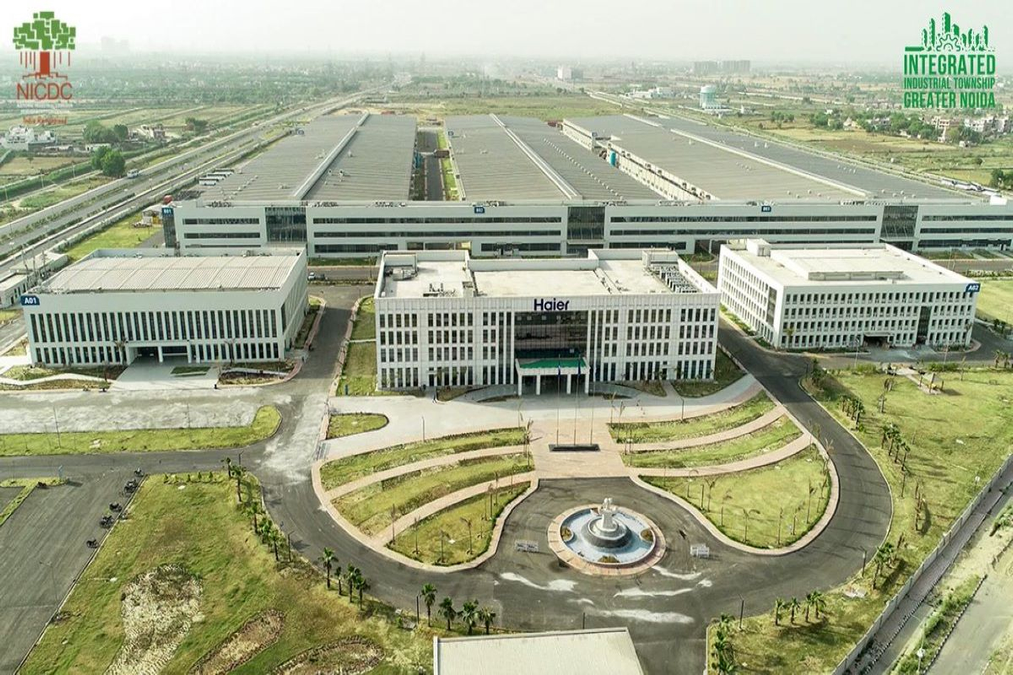
The DNGIR is intended to encourage manufacturing, technology development, services and new industries.
Existing industrial activity in the broader region already includes sectors such as:
- Information technology
- Food processing
- Textiles
- Chemicals
- Steel
- Fabricated metal products
- Sports goods
- Automobiles
- Consumer electronics
The DNGIR planning documents specifically highlight the potential to attract new businesses, promote innovation and support sunrise industries.
Electronics and High-Tech Manufacturing
Greater Noida and the wider Noida region have developed an important electronics and manufacturing ecosystem.
This provides a foundation for future industrial expansion.
Potential future growth areas can include:
- Electronics manufacturing
- Consumer electronics
- Components
- Engineering
- Technology products
- High-tech manufacturing
- Research and development
The presence of an existing manufacturing ecosystem can make a region more attractive to suppliers and ancillary businesses.
Automobile and Auto Components
The wider NCR has a strong automotive ecosystem.
Greater Noida’s connectivity to Delhi, Haryana, western Uttar Pradesh and major logistics routes can support businesses associated with:
- Auto components
- Engineering
- Manufacturing
- Warehousing
- Distribution
- Industrial services
A growing industrial corridor can also encourage the development of supplier ecosystems around major manufacturers.
Logistics and E-Commerce
One of the biggest potential growth sectors around DMIC Greater Noida is logistics.
The combination of:
Expressways + Freight Corridors + MMLH + Industrial Development + NCR Consumer Market
can create a strong environment for logistics businesses.
Potential activities include:
- Warehousing
- Fulfilment centres
- Distribution centres
- Cold-chain logistics
- E-commerce logistics
- Freight forwarding
- 3PL operations
- Packaging
- Inventory management
Defence and Advanced Manufacturing
The broader Uttar Pradesh industrial ecosystem is also developing defence manufacturing capabilities.
This can create opportunities for advanced manufacturing, engineering, component suppliers and supporting industries.
For DMIC Greater Noida, the long-term potential lies in developing high-value manufacturing rather than relying only on traditional industries.
Employment Generation: The Biggest Long-Term Impact
One of the most important aspects of the DMIC Greater Noida story is employment.
Industrial infrastructure creates economic value not only through factories but also through supporting services.
The official DNGIR material estimates approximately 1.2 million employment opportunities by 2040 as the region develops in phases.
This should be understood as a planning estimate/potential, not a guaranteed number of jobs.
Where Will the Jobs Come From?
Employment can develop across multiple categories.
Manufacturing Jobs
Factories require:
- Operators
- Technicians
- Engineers
- Quality-control professionals
- Production managers
- Maintenance teams
Logistics Jobs
Logistics facilities require:
- Warehouse staff
- Fleet managers
- Supply-chain professionals
- Freight operators
- Packaging workers
- Inventory specialists
Technology Jobs
Smart industrial infrastructure can increase demand for:
- IT professionals
- Data specialists
- Automation engineers
- Cybersecurity professionals
- Software professionals
Business Services
Industrial companies also need:
- Accountants
- Lawyers
- HR professionals
- Consultants
- Marketing professionals
- Administrative staff
Supporting Services
Large employment centres create demand for:
- Restaurants
- Retail
- Healthcare
- Education
- Security
- Transport
- Hospitality
- Maintenance
This creates an economic multiplier.
Employment Can Drive Residential Growth
A major industrial corridor eventually requires housing for its workforce.
The relationship can be represented as:
Industrial Investment
↓
Companies
↓
Employment
↓
Population Growth
↓
Housing Demand
↓
Retail & Commercial Development
↓
Schools & Healthcare
↓
Urban Expansion
This is why employment generation is one of the most important factors to monitor when evaluating the future real estate potential of DMIC Greater Noida.
Impact on Greater Noida Real Estate
The long-term real estate impact of DMIC will depend on the actual pace of industrial development.
The most important potential beneficiaries could include locations with:
- Strong road connectivity
- Existing population
- Proximity to employment centres
- Access to public transportation
- Nearby industrial areas
- Established social infrastructure
Different real estate segments may benefit differently.
Residential
Demand may increase as employment expands.
Commercial
Retail and office demand can increase around employment and residential clusters.
Warehousing
Industrial and logistics growth can increase demand for strategically located warehouses.
Industrial Property
Manufacturing companies can create demand for industrial plots and facilities.
Rental Housing
Employees and professionals can support rental demand near employment centres.
DMIC Greater Noida and the 2030–2040 Growth Cycle
The development of the region can be viewed in four broad stages.
2026–2030: Infrastructure & Investment Foundation
This period can focus on:
- Industrial plot development
- Utility infrastructure
- Logistics planning and procurement
- Transport infrastructure
- Company investment
- Supporting road infrastructure
Current IITGNL tender activity demonstrates that major components such as the MMLH and electrical/civil infrastructure continue to move through formal procurement processes in 2026.
2030–2035: Industrial Expansion
If infrastructure projects progress successfully, this stage could see:
- More manufacturing units
- Logistics facilities
- Warehousing
- Employment growth
- Commercial development
- Housing demand
2035–2040: Integrated Economic Region
By this stage, the broader objective would be to create an integrated economic ecosystem comprising:
Manufacturing + Logistics + Transportation + Housing + Commercial + Services
The official DNGIR planning vision targets significant employment creation by 2040.
What Could Make DMIC Greater Noida Successful?
Several factors will determine whether the region achieves its long-term potential.
1. Infrastructure Execution
Projects must move from planning to construction and operation.
2. Industrial Occupancy
Industrial plots need actual companies and productive activity.
3. Logistics Integration
MMLH needs effective integration with freight corridors and road networks.
4. Transportation Connectivity
MMTH and other transport systems need to provide practical connectivity.
5. Skilled Workforce
Industries need trained employees.
6. Ease of Doing Business
Companies require efficient approvals and predictable regulations.
7. Urban Infrastructure
Housing, healthcare, education and commercial facilities must grow alongside employment.
8. Private Investment
Government infrastructure can establish the foundation, but private investment is essential for economic activity.
Why Companies May Choose DMIC Greater Noida
Companies evaluating future manufacturing and logistics locations generally consider several factors.
DMIC Greater Noida offers a combination of:
Access to NCR
Proximity to one of India’s largest metropolitan markets.
Freight Connectivity
Access to the DFC ecosystem.
Expressways
Connectivity to regional markets.
Industrial Land
Planned industrial development.
Logistics
A dedicated MMLH is planned for the region.
Workforce
The NCR and surrounding districts provide a large potential labour pool.
Infrastructure
Planned utilities and smart infrastructure within the Integrated Industrial Township.
Investment Opportunities in DMIC Greater Noida
The future DMIC story can create multiple investment themes.
Industrial Investment
Suitable for businesses requiring manufacturing or industrial facilities.
Logistics Investment
Warehousing and logistics facilities can benefit from freight connectivity.
Commercial Investment
Retail, office and business-service requirements can increase with employment.
Residential Investment
Housing demand can increase around genuine employment centres.
Rental Investment
Rental demand may benefit from workforce migration and industrial expansion.
However, investors should avoid treating projected infrastructure appreciation as guaranteed.
DMIC Greater Noida Investment Checklist
Before investing, check:
1. Exact Location
Do not rely on the phrase “DMIC connected.”
2. Development Authority
Verify the responsible authority.
3. Land Use
Confirm whether the property is residential, commercial, industrial or another category.
4. RERA
Check RERA registration where applicable.
5. Title
Verify ownership and legal documentation.
6. Infrastructure Status
Determine whether infrastructure is:
- Operational
- Under construction
- Tendered
- Approved
- Proposed
7. Actual Distance
Measure actual road distance to major infrastructure.
8. End-User Demand
Check whether people and businesses are actually using the area.
9. Rental Market
For income-oriented investment, examine existing rents and occupancy.
10. Developer/Authority Credentials
Verify the developer and relevant approvals.
DMIC Greater Noida: Future Growth Map
The broader development can be understood through the following economic geography:
Dadri
Logistics + Freight + MMLH
↓
Boraki
MMTH + Railway + Passenger Connectivity
↓
Integrated Industrial Township
Manufacturing + Industry + Smart Infrastructure
↓
Greater Noida
Residential + Commercial + Education + Services
↓
Noida / NCR
Corporate + Technology + Consumer Market
↓
Yamuna Expressway Region
Airport + Industrial + Logistics Growth
This interconnected ecosystem is one of the biggest reasons the DMIC Greater Noida region is attracting long-term attention.
The Role of Smart Infrastructure
Smart infrastructure can become increasingly important as industrial cities become more complex.
The Integrated Industrial Township’s infrastructure framework already includes:
- SCADA
- Automated waste collection
- 24×7 water supply
- Planned electrical substations
- Structured road hierarchy
- Utility management
These systems can improve operational efficiency and make industrial areas more attractive to businesses.
Sustainability and Green Development
The future industrial city cannot depend only on factories.
Modern industrial development increasingly requires:
- Efficient water management
- Waste management
- Energy efficiency
- Green spaces
- Sustainable transportation
- Environmental monitoring
- Responsible industrial practices
The official IITGNL vision includes sustainability alongside smart infrastructure and global competitiveness.
DMIC Greater Noida: Biggest Opportunities by 2040
By 2040, the strongest opportunities could potentially emerge around:
Manufacturing
High-value industrial production.
Logistics
Freight, warehousing and distribution.
Technology
Automation, electronics and advanced manufacturing.
Commercial Services
Business centres and support services.
Residential Development
Housing linked to employment growth.
Education and Skill Development
Training workers for advanced industries.
Healthcare
Supporting a growing population.
Hospitality
Hotels and business accommodation for industrial activity.
Challenges That DMIC Greater Noida Must Overcome
A balanced article should also discuss the challenges.
Project Execution
Large infrastructure projects can take years to complete.
Land Acquisition and Development
Industrial development requires coordinated land and infrastructure planning.
Traffic Management
Population and industrial growth can increase road traffic.
Environmental Management
Industrial expansion requires responsible environmental management.
Skill Gap
Local workers may need training for advanced manufacturing and technology jobs.
Housing Infrastructure
Housing and social infrastructure must keep pace with employment.
Implementation Timelines
Announcements, tenders, construction and operationalisation are different stages and should not be treated as the same.
DMIC Greater Noida: Vision 2030 vs Vision 2040
| Area | 2030 Direction | 2040 Potential |
|---|---|---|
| Industry | Increasing industrial investment | Mature industrial ecosystem |
| Logistics | MMLH development | Large freight & logistics network |
| Transportation | Infrastructure expansion | Integrated multimodal mobility |
| Employment | Growing industrial workforce | Up to 1.2 million potential employment in DNGIR planning |
| Housing | Increasing demand | Large employment-linked residential market |
| Commercial | Retail and business expansion | Integrated commercial ecosystem |
| Technology | Smart infrastructure | Digitally managed industrial city |
| Manufacturing | New industrial units | Larger manufacturing ecosystem |
| Warehousing | Growing demand | Major logistics market |
| Services | Supporting industries | Mature business-services ecosystem |
The 1.2-million employment figure is an official DNGIR planning estimate for 2040, not a guaranteed outcome.
Is DMIC Greater Noida the Future of NCR Industrial Growth?
DMIC Greater Noida has several characteristics associated with successful industrial corridors:
Strategic Location
Dedicated Freight Connectivity
Expressways
Industrial Township
Logistics Hub
Multimodal Transport Hub
Large NCR Market
Employment Potential
These factors create a strong foundation for long-term growth.
However, the ultimate success of the corridor will depend on execution, private investment, industrial occupancy, infrastructure completion and the ability to create a sustainable employment ecosystem.
DMIC Greater Noida Vision 2030–2040
The future of DMIC Greater Noida is fundamentally an infrastructure-and-employment story.
The region is being planned around a combination of industrial development, logistics, transportation and smart infrastructure.
The Integrated Industrial Township provides the industrial foundation.
The Multi Modal Logistics Hub at Dadri is intended to strengthen freight and supply-chain connectivity.
The Multi Modal Transport Hub at Boraki is designed to improve passenger connectivity.
The Dedicated Freight Corridor network provides the backbone for industrial freight movement.
And the wider DNGIR provides the long-term economic geography within which these projects are expected to operate.
The official planning vision estimates the potential for approximately 1.2 million jobs by 2040, highlighting the scale of the proposed transformation.
For real estate investors, the most important lesson is that the opportunity should not be evaluated simply by asking:
“Is this property near DMIC?”
Instead, the better questions are:
Where exactly is the property?
Which infrastructure projects are actually confirmed?
What is their current development status?
Where will the employment centres be?
How strong is existing connectivity?
Is there genuine end-user demand?
The answers to these questions will determine which locations benefit most from the DMIC Greater Noida growth story.
If infrastructure execution continues, industrial investment increases and employment develops as planned, the Dadri-Greater Noida-Boraki belt could become an increasingly important manufacturing, logistics and employment centre within the NCR by 2030–2040.
Frequently Asked Questions
What is the future of DMIC Greater Noida?
The future of DMIC Greater Noida is centred around industrial development, logistics, multimodal transportation, smart infrastructure and employment generation through the DNGIR ecosystem.
What is the DNGIR 2040 employment target?
IITGNL’s DNGIR planning material estimates approximately 1.2 million employment opportunities by 2040. This is a planning estimate and not a guaranteed employment figure.
What are the major DMIC projects in Greater Noida?
The major early-bird projects are the Integrated Industrial Township, Multi Modal Logistics Hub at Dadri and Multi Modal Transport Hub at Boraki.
What is the MMLH in Greater Noida?
MMLH stands for Multi Modal Logistics Hub. It is planned at Dadri to support freight movement, storage, container handling, export/import logistics and value-added logistics services.
What is MMTH Boraki?
MMTH stands for Multi Modal Transport Hub. The Boraki project is planned to integrate railway, interstate bus and MRTS connectivity along with commercial and business facilities.
Will companies come to DMIC Greater Noida?
The region is designed to attract manufacturing, logistics, technology and service-sector investment. However, individual company announcements should be verified through official company or government sources before being described as confirmed upcoming investments.
Will DMIC increase Greater Noida property prices?
Industrial infrastructure and employment can contribute to real estate demand, but appreciation is not guaranteed. Property performance will depend on exact location, infrastructure execution, supply, demand and pricing.
Is DMIC Greater Noida good for long-term investment?
The region has a strong infrastructure-led development story, but investors should evaluate individual properties based on legal approvals, location, land use, connectivity, development status and genuine demand rather than relying solely on future projections.
-
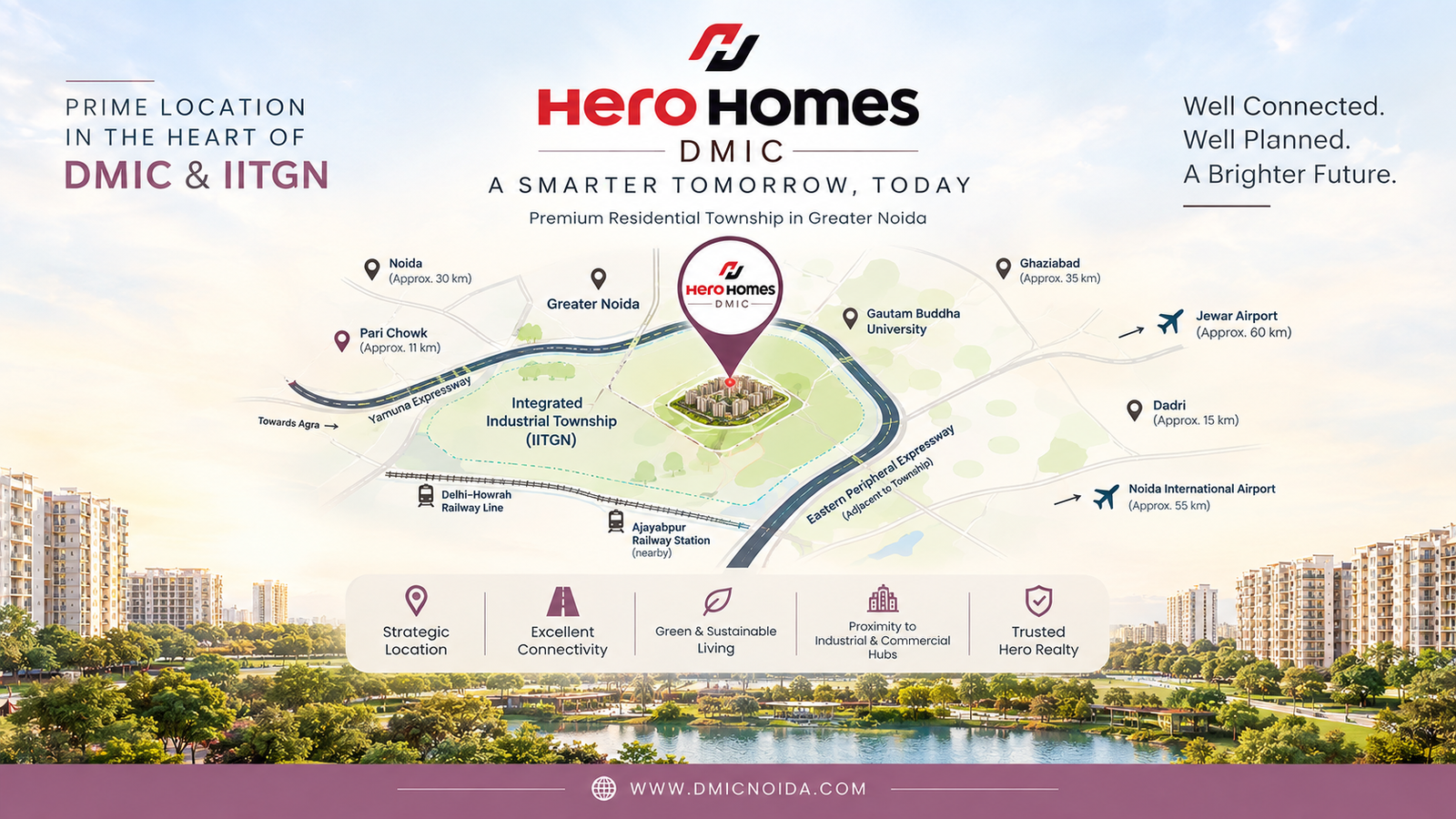
Hero Homes DMIC Greater Noida Situated Inside the Integrated Industrial Township
Location is one of the main factors to consider when evaluating Hero Homes DMIC. The project is situated inside the Integrated Industrial Township, placing it within a planned development zone connected to the wider Greater Noida and DMIC infrastructure network. 1. Integrated Industrial Township Location The project is located within IITGN, an industrial township planned…
-
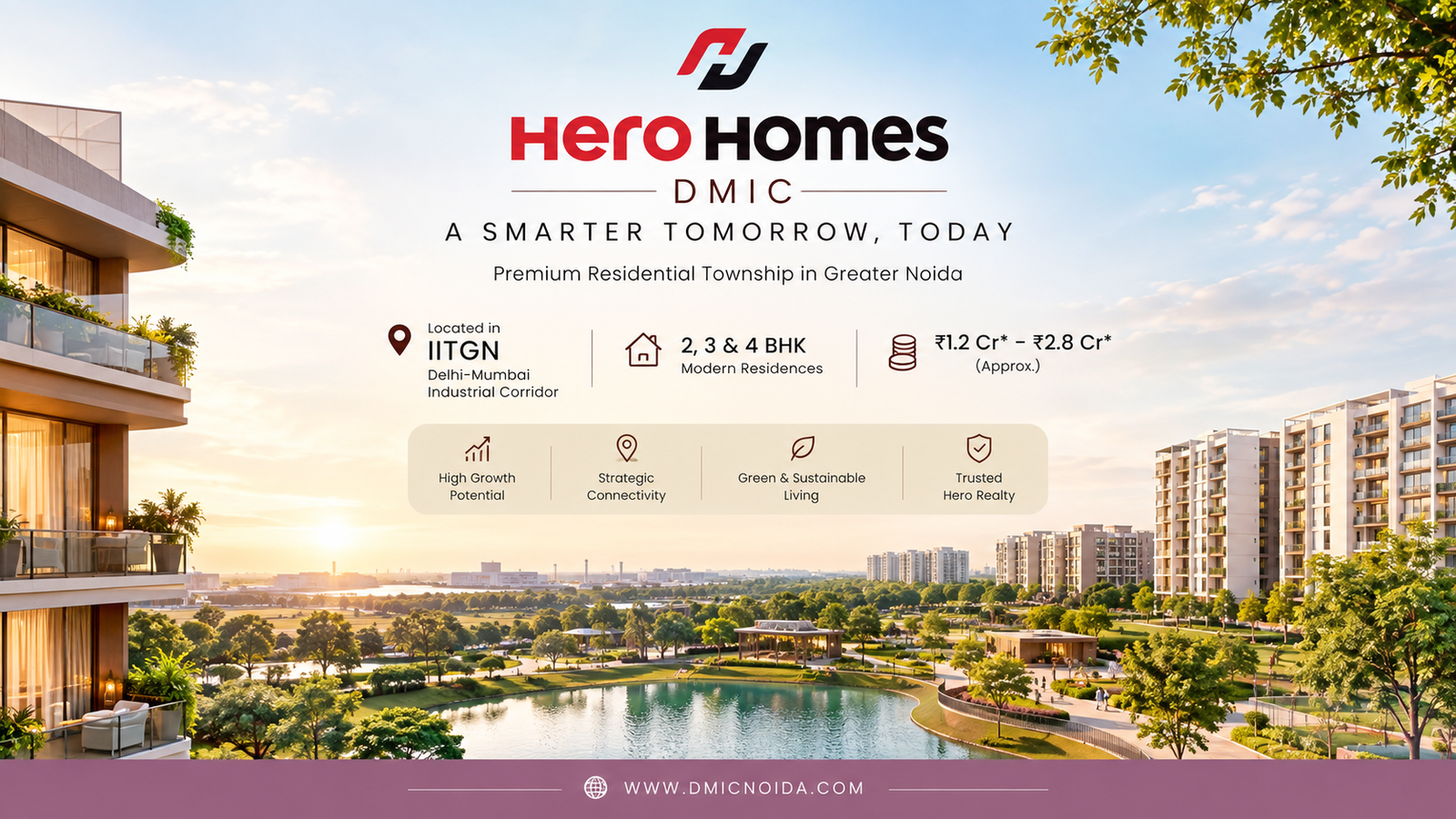
Hero Homes DMIC Greater Noida | 17.3-Acre Residential Township
Greater Noida is attracting attention as infrastructure development, industrial expansion and planned urbanisation continue to shape the National Capital Region’s real estate landscape. Within this evolving market, Hero Homes DMIC Greater Noida is an upcoming residential development by Hero Realty, planned across approximately 17.3 acres inside the Integrated Industrial Township (IITGN), part of the Delhi-Mumbai…
-
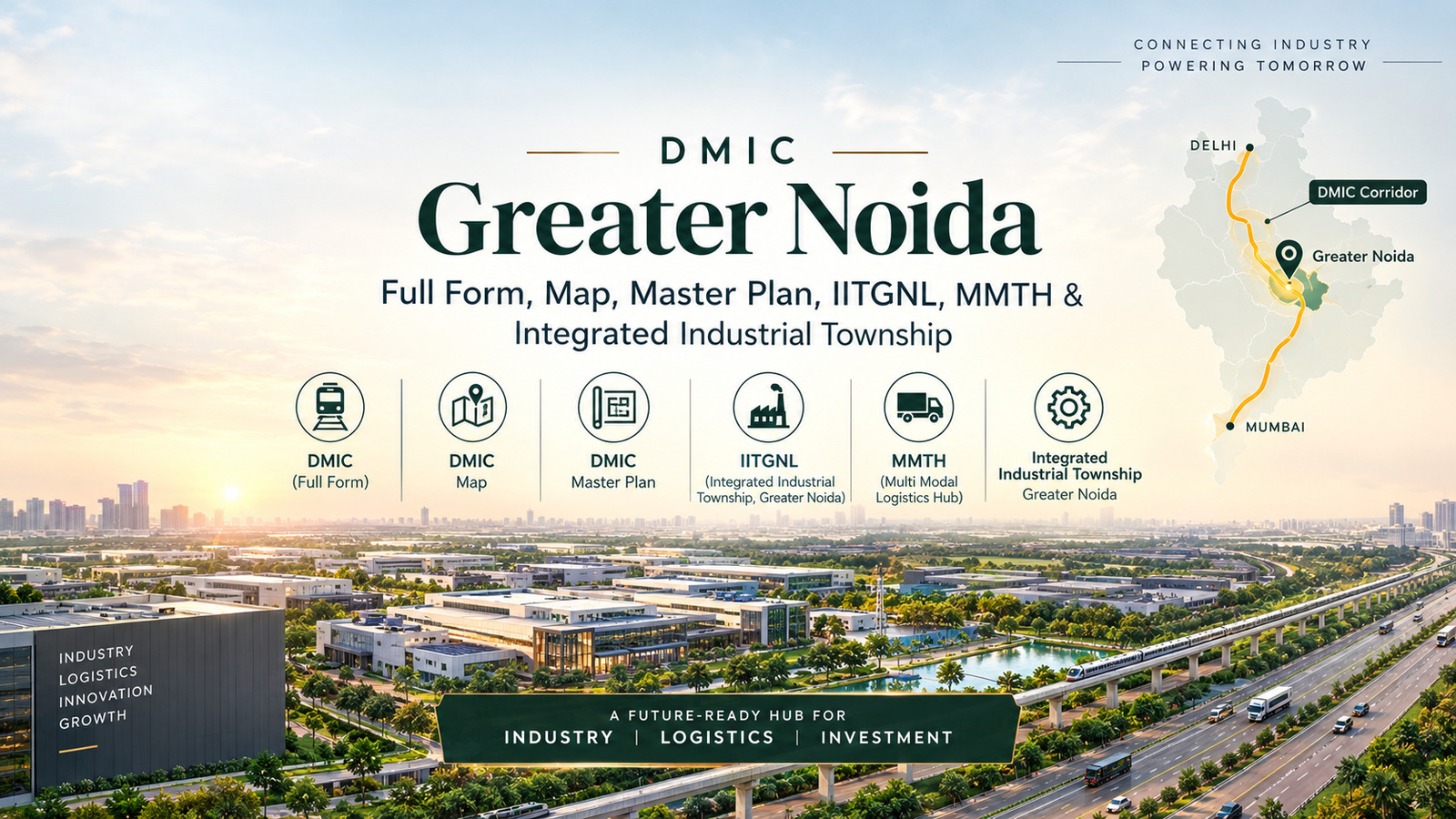
DMIC Greater Noida: Full Form, Map, Master Plan, IITGNL, MMTH & Integrated Industrial Township
Greater Noida is emerging as an important industrial, logistics and infrastructure destination within the National Industrial Corridor programme. At the centre of this development is the Integrated Industrial Township, Greater Noida, associated with the Delhi-Mumbai Industrial Corridor (DMIC). For people searching online for DMIC Greater Noida full form, DMIC Greater Noida map, DMIC Greater Noida…
-
What Should Homebuyers Know Before Buying Property Near DMIC Greater Noida?
Greater Noida’s DMIC corridor is attracting increasing attention from homebuyers because several major infrastructure and economic-development initiatives are converging in the region. The area combines: But buying property in an emerging corridor requires a different approach from buying in a mature neighbourhood. A location can have excellent long-term potential while an individual project may still…
-
How the DMIC Corridor Could Create New Employment Opportunities in Greater Noida
When people discuss the future of Greater Noida, the conversation often focuses on roads, housing, expressways and real estate. But one of the most important factors behind long-term urban growth is often overlooked: employment. People generally move toward economic opportunities. Businesses follow infrastructure. Infrastructure attracts investment. Investment creates employment. And employment can eventually influence housing,…
-
DMIC Greater Noida vs Traditional Greater Noida: Growth Explained
Greater Noida has evolved considerably since its development as a planned extension of the National Capital Region. For many years, the city’s growth story was largely associated with planned residential sectors, educational institutions, commercial centres, expressways and expansion of the wider NCR urban footprint. A different type of growth is now becoming increasingly important around…
-
Eastern Peripheral Expressway to DMIC Greater Noida: Connectivity Guide
Why Connectivity Is Central to the DMIC Greater Noida Story For an industrial corridor, connectivity is not simply about reducing travel time. It determines how efficiently people, raw materials, finished products and services can move between different parts of an economic region. This is particularly relevant to the DMIC Integrated Township Greater Noida, which is…
-
Why Residential Demand Could Rise Around Greater Noida’s Industrial Corridors
The Link Between Jobs and Housing Residential development does not happen independently of economic development. When new industrial, logistics and commercial centres emerge, they can create demand for a supporting population. That population needs: This relationship is particularly relevant to Greater Noida, where industrial corridors, logistics infrastructure and airport-led development are increasingly becoming part of…
-
How Noida International Airport Will Transform DMIC Greater Noida
The development of Noida International Airport (DXN) is changing the infrastructure map of Greater Noida and the wider Delhi-NCR region. What was once primarily viewed as a future airport project is now becoming an operational aviation and cargo gateway. Commercial passenger operations began in June 2026, while dedicated cargo facilities are being developed and expanded…
-
Why E-Commerce Giants Need DMIC Greater Noida
India’s e-commerce industry is changing the way products are manufactured, stored, transported and delivered. Customers increasingly expect faster delivery, accurate inventory availability and convenient return services. For e-commerce companies, this makes location and logistics infrastructure just as important as technology. This is where DMIC Greater Noida can become strategically important. Greater Noida sits within the…
-
Dadri Logistics Hub: The Biggest Growth Engine of DMIC Greater Noida
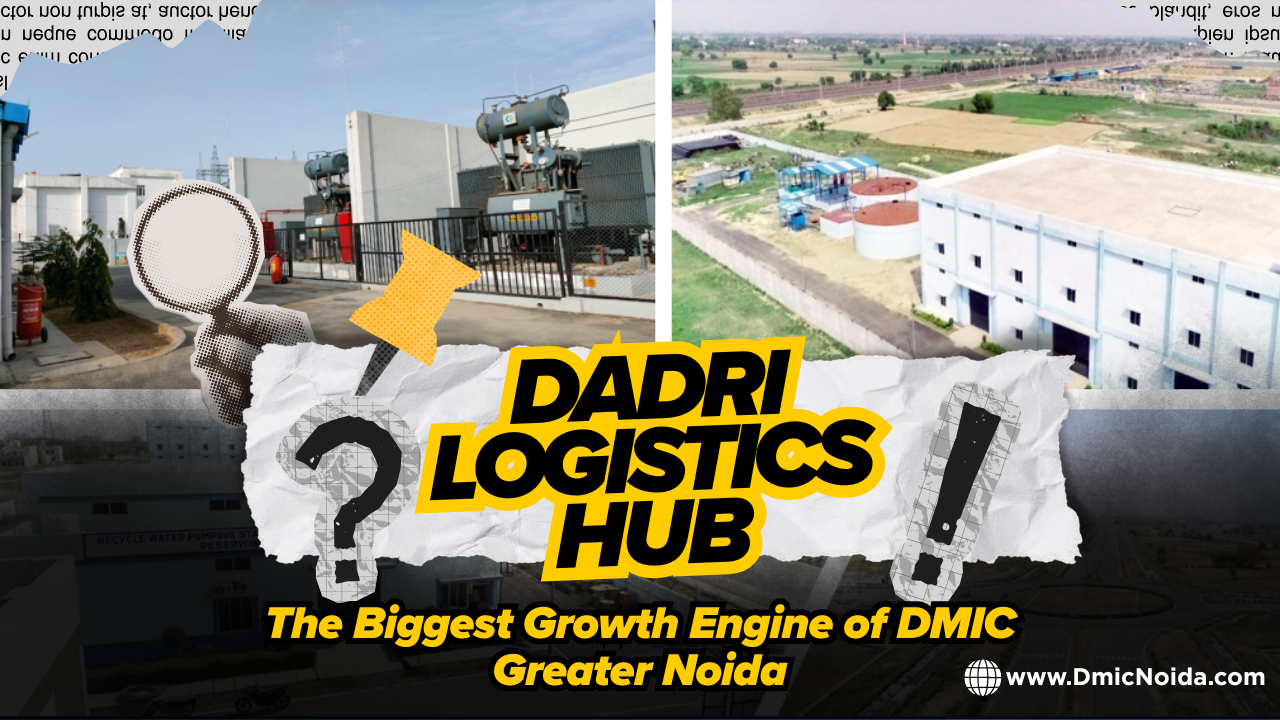
Explore the Dadri Multi-Modal Logistics Hub, including MMLH, warehousing, container terminals, dry port potential, DFC connectivity and its role in DMIC Greater Noida. When discussing the future of DMIC Greater Noida, much of the attention naturally goes towards manufacturing, industrial parks and large corporate investments. However, one of the most important pieces of the region’s…
-

South Korean Investments in DMIC Greater Noida
The Noida–Greater Noida region has emerged as one of India’s most important electronics and consumer-technology manufacturing clusters, and South Korean companies have played a major role in that transformation. From Samsung’s large-scale electronics manufacturing operations to LG Electronics’ manufacturing presence in Greater Noida, Korean companies have helped establish a strong industrial ecosystem across the wider…
-
Haier’s Mega Manufacturing Hub in DMIC Greater Noida: A Case Study
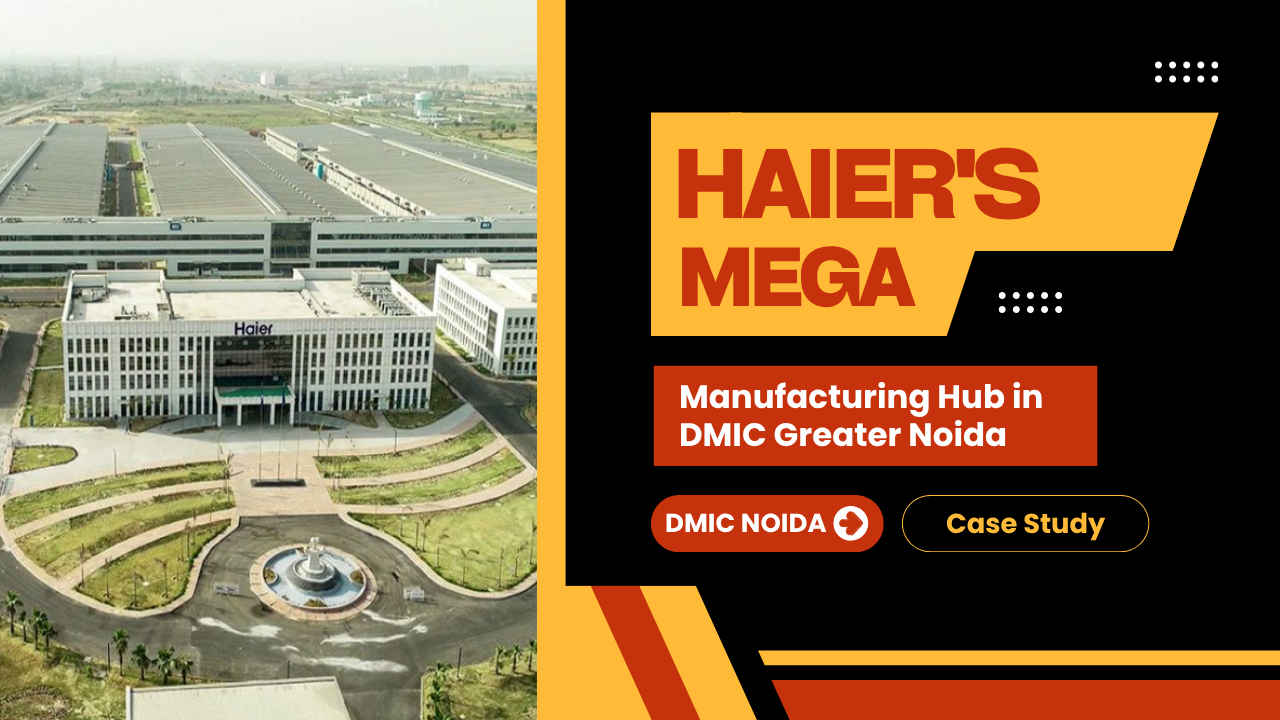
Explore Haier Greater Noida manufacturing hub in DMIC, including investment, production capacity, employment impact, expansion plans and its role in the region’s industrial growth. The development of the DMIC Greater Noida industrial ecosystem is not only about planned infrastructure and future investment. It is already home to major manufacturing companies that have established large-scale production…
buying property DMIC Greater Noida Dadri DFC Dadri logistics hub Dadri MMLH DMIC 2030 DMIC companies in Greater Noida DMIC connectivity DMIC corridor investment DMIC electronics industry DMIC employment opportunities DMIC Greater Noida DMIC Greater Noida 2030 DMIC Greater Noida 2040 DMIC Greater Noida airport DMIC Greater Noida apartments DMIC Greater Noida companies DMIC Greater Noida connectivity DMIC Greater Noida development DMIC Greater Noida industries DMIC Greater Noida investment DMIC Greater Noida jobs DMIC Greater Noida logistics DMIC Greater Noida property DMIC Greater Noida residential demand DMIC Integrated Township DMIC real estate investment Godrej DMIC Greater Noida Godrej Global Business City Godrej Properties Greater Noida Godrej residential development Greater Noida industrial corridor Greater Noida industrial development Greater Noida industrial investment Greater Noida logistics hub Greater Noida logistics infrastructure Greater Noida manufacturing hub Greater Noida warehousing Hero Homes DMIC Contact Number Hero Homes DMIC Floor Plans Hero Homes DMIC Master Plans Hero Homes DMIC Payment Plan Integrated Industrial Township Greater Noida logistics companies Greater Noida manufacturing Greater Noida MMLH Greater Noida